Benjamin Franklin’s birthday


Benjamin Franklin Drawing Electricity from the Sky, picture by Benjamin West

“If all printers were determined not to print anything till they were sure it would offend nobody, there would be very little printed.”
Benjamion Franklin, Apology for Printers (1730).

Continue reading

Posted in writing | Tagged , , , , , , | 2 Comments

Nothing is going to change

It’s an issue I was determined to avoid in this blog and for a good reason. A lot has been written (and blogged, tweeted…) about sexual harassment of female students in STEM. Reading Sean Carroll‘s blog-post, “We Suck (But We Can Be Better)“, changed my mind. First, it is an excellent post, which I recommend to anyone interested in academic life. Second, this passage resonated with me: Continue reading

Posted in academia, physics | Tagged , , , , , , | Leave a comment

Science, science-fiction and the power of imagination


Kazuo Ishiguro and Neil Gaiman. Illustration by Tim McDonagh, image from New Statesman.

“In her mind’s eye, she saw forsaken civilizations, the bygone times when gods mixed with heroes and monsters interbred with beasts. Her childhood heroes were all brave, noble and just. And none of them, Danielle realized, would have made a successful professor of physics, nor even a candidate for a tenured position.
She smiled at the thought. Leaving fairy tales and mythical heroes behind was a natural process of growing. Like many others, she had turned to science fiction, where she had discovered alien worlds, hyperspace and time-traveling. Her fascination with space was a prelude for studying physics, a profession that transcended societies and explored the uncharted waters of nature.”
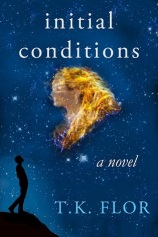
From Initial Conditions

Danielle’s path from science-fiction to science was neither unique nor rarely trodden. The high-correlation between reading science-fiction and becoming a scientist or engineer had even prompted the Chinese government to sponsor a science-fiction convention in China. Here is an excerpt from Neil Gaiman’s recollections (cited from here): Continue reading

Posted in fiction, literature, physics, science fiction, writing | Tagged , , , , , , | Leave a comment

Isaac Asimov’s Birthday


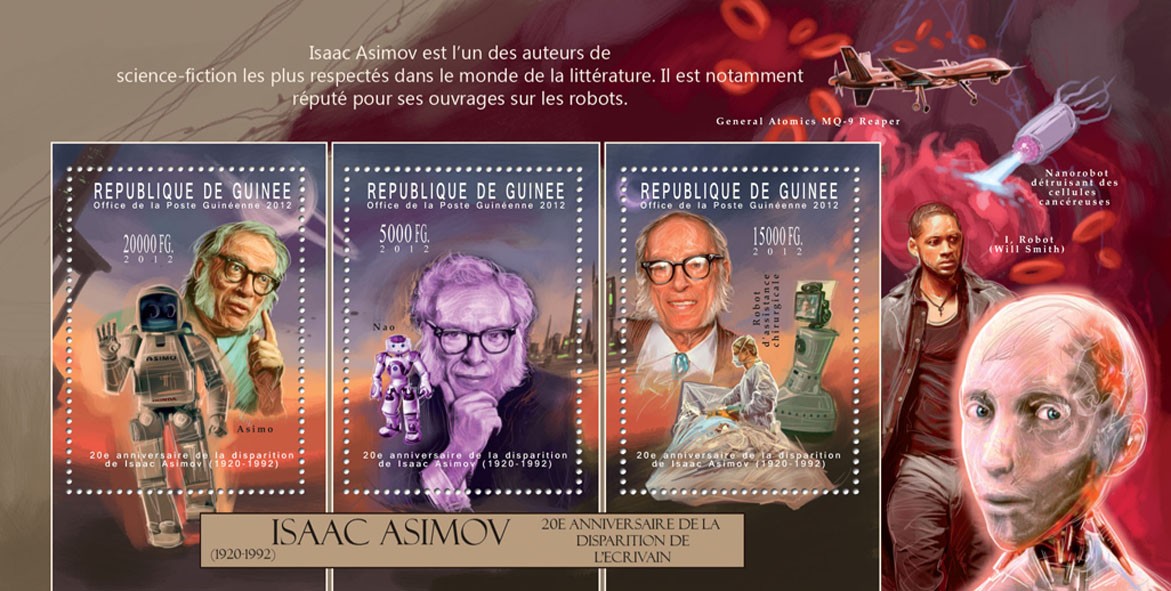
Republic of Guinea Post commemorative stamps for Isaac Asimov

Isaac Asimov was born on January 2, 1920 (or so his parents asserted). An American author and professor of biochemistry at Boston University, he wrote or edited more than 500 books. Despite the versatility of subjects he wrote about, Asimov is best known for his hard science-fiction stories. The Foundation Series is his most famous work. The original trilogy: Foundation, Foundation and Empire, and Second Foundation, won the one-time Hugo Award for “Best All-Time Series” in 1966. Another major work is Asimov’s Robot series. His story “Nightfall” (published in 1941) has been described as one of “the most famous science-fiction stories of all time”. In 1968, the Science Fiction Writers of America voted “Nightfall” as the best science fiction short story ever written. Asimov himself believed that his most enduring contributions would be his “Three Laws of Robotics” and the Foundation series. He is credited with coining the term “robotics”. (Summarized from Wikipedia).

I’ve read and reread Asimov since elementary school, and have admired many of his science-fiction novels and short stories. They definitely inspired me to study physics and to write my own stories. Before writing this post, I asked around and searched on the Internet about others’ favorite Asimov’s stories. I found that opinions vary about his extensive oeuvre. According to Frequently Asked Questions about Isaac Asimov:

“Asimov’s favorite novel was The Gods Themselves, largely because of the middle section, which was both absolutely brilliant and included non-humans and sex…
Asimov’s three favorite stories were (in order): “The Last Question”, “The Bicentennial Man”, and “The Ugly Little Boy”.”

Although I enjoyed reading The Gods Themselves and liked the above mentioned three stories, I prefer different ones. My favorite Asimov novels are the Foundation trilogy and The Caves of Steel. Instead of naming my three favorite Asimov short stories, here are citations from each:

Tony said one morning, “it’s time to start buying, and I’m not allowed to leave the house. If I write out exactly what we must have, can I trust you to get it? We need drapery, and furniture fabric, wallpaper, carpeting, paint, clothing – and any number of small things.”
“You can’t get these things to your own specification at a stroke’s notice,” said Claire doubtfully.
“You can get fairly close, if you go through the city and if money is no object.”
“But, Tony, money is certainly an object.”
“Not at all. Stop off at U.S. Robots in the first place. I’ll write a note for you. You see Dr. Calvin, and tell her that I said it was part of the experiment.”

***

He wasn’t speaking to George. He wasn’t speaking to anyone. He was just uncorked and frothing. George realized that.
George said,” If you knew in advance that the Beemans were going to be used, couldn’t you have studied up on them?”
“They weren’t in my tapes, I tell you.”
“You could have read – books.”
The last word had tailed off under Trevelyan’s suddenly sharp look.
Trevelyan said, “Are you trying to make a big laugh out of this? You think this is funny? How do you expect me to read some book and try to memorize enough to match someone else who knows.”
“I thought – “
“You try it. You try – “ Then suddenly, “What’s your profession, by the way?” He sounded thoroughly hostile.
“Well – “
“Come on, now. If you are going to be a wise guy with me, let’s see what you’ve done. You’re still on Earth, I notice, so you’re not a Computer Programmer and your special assignment can’t be much.”

***

“Oh, yes,” said Dr. Phineas Welch, “I can bring back the spirits of the illustrious dead.”
He was a little drunk, or maybe he wouldn’t have said it. Of course, it was perfectly all right to get a little drunk at the annual Christmas party.
Scott Robertson, the school’s young English instructor, adjusted his glasses and looked to right and left to see if they were overheard. “really, Dr. Welch.”
“I mean it. And not just the spirits. I bring back the bodies, too.”
“I wouldn’t have said it were possible,” said Robertson primly.
“Why not? A simple matter of temporal transference.”
“You mean time travel? But that’s quite – uh – unusual.”
“Not if you know how.”
“Well, how, Dr. Welch?”
“Think I’m going to tell you?” asked the physicist gravely. He looked vaguely about for another drink and didn’t find any. He said, “I brought quite a few back. Archimedes, Newton, Galileo. Poor fellows.”

The first excerpt is from “Satisfaction Guaranteed” (1955), and, yes, Dr. Calvin is the Dr. Susan Calvin, the most inspiring female scientist I’ve ever met in fiction. The second one is from “Profession” (1957). In some sense that story (supposedly taking place about four thousands years in the future) already seems outdated, but only in details. The advance and the expansion of new technologies are already making profound changes in our society. With more and more professions becoming redundant, and Earth’s population continued growth, “Profession” seems to me much more relevant now than when I’d read it first. “The Immortal Bard” (1953) is my all time favorite. In retrospect I agree with Asimov, physics and literature do not always mix well.

I recently blogged about Asimov’s autobiographies in this post.


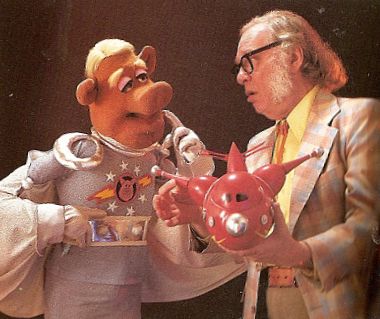
Image: Asimov interviewed for the summer 1983 issue of Muppet Magazine

Posted in fiction, literature, science fiction | Tagged , , , , , , | 2 Comments

How the Milky Way Formed

The night was scented and mysterious. The wind was playing an eerie fleshless melody in the reeds of the brook hollow. The sky was dark and starry, and across it the Milky Way flung its shimmering misty ribbons.
“There’s four hundred million stars in the Milky Way,” quoth Peter, who frequently astonished us by knowing more than any hired boy could be expected to. He had a retentive memory, and never forgot anything he heard or read. The few books left to him by his oft-referred-to Aunt Jane had stocked his mind with a miscellaneous information which sometimes made Felix and me doubt if we knew as much as Peter after all. Felicity was so impressed by his knowledge of astronomy that she dropped back from the other girls and walked beside him. She had not done so before because he was barefooted. It was permissible for hired boys to go to public meetings— when not held in the church— with bare feet, and no particular disgrace attached to it. But Felicity would not walk with a barefooted companion. It was dark now, so nobody would notice his feet.
“I know a story about the Milky Way,” said the Story Girl, brightening up. “I read it in a book of Aunt Louisa’s in town, and I learned it off by heart. Once there were two archangels in heaven, named Zerah and Zulamith—“
“Have angels names— same as people?” interrupted Peter.
“Yes, of course. They MUST have. They’d be all mixed up if they hadn’t.”
“And when I’m an angel— if I ever get to be one— will my name still be Peter?”
“No. You’ll have a new name up there,” said Cecily gently. “It says so in the Bible.”
“Well, I’m glad of that. Peter would be such a funny name for an angel. And what is the difference between angels and archangels?”
“Oh, archangels are angels that have been angels so long that they’ve had time to grow better and brighter and more beautiful than newer angels,” said the Story Girl, who probably made that explanation up on the spur of the moment, just to pacify Peter.
“How long does it take for an angel to grow into an archangel?” pursued Peter.
“Oh, I don’t know. Millions of years likely. And even then I don’t suppose ALL the angels do. A good many of them must just stay plain angels, I expect.”
“I shall be satisfied just to be a plain angel,” said Felicity modestly.
“Oh, see here, if you’re going to interrupt and argue over everything, we’ll never get the story told,” said Felix.
“Dry up, all of you, and let the Story Girl go on.” We dried up, and the Story Girl went on.

“Zerah and Zulamith loved each other, just as mortals love, and this is forbidden by the laws of the Almighty. And because Zerah and Zulamith had so broken God’s law they were banished from His presence to the uttermost bounds of the universe. If they had been banished TOGETHER it would have been no punishment; so Zerah was exiled to a star on one side of the universe, and Zulamith was sent to a star on the other side of the universe; and between them was a fathomless abyss which thought itself could not cross. Only one thing could cross it— and that was love. Zulamith yearned for Zerah with such fidelity and longing that he began to build up a bridge of light from his star; and Zerah, not knowing this, but loving and longing for him, began to build a similar bridge of light from her star. For a thousand thousand years they both built the bridge of light, and at last they met and sprang into each other’s arms. Their toil and loneliness and suffering were all over and forgotten, and the bridge they had built spanned the gulf between their stars of exile.
“Now, when the other archangels saw what had been done they flew in fear and anger to God’s white throne, and cried to Him,
“’See what these rebellious ones have done! They have built them a bridge of light across the universe, and set Thy decree of separation at naught. Do Thou, then, stretch forth Thine arm and destroy their impious work.’
“They ceased— and all heaven was hushed. Through the silence sounded the voice of the Almighty.
“’ Nay,’ He said, ‘whatsoever in my universe true love hath builded not even the Almighty can destroy. The bridge must stand forever.’
“And,” concluded the Story Girl, her face upturned to the sky and her big eyes filled with starlight, “it stands still. That bridge is the Milky Way.”

From The Story Girl by L. M. Montgomery

I stumbled upon this beautiful story, of which I have not heard before. Obviously, Peter was wrong about the number of stars in our galaxy, but when The Story Girl was published in 1911, even astronomers were unlikely to believe the modern estimate that Milky Way contains 200–400 billion stars. According to Wikipedia:

“From Earth the Milky Way appears as a band because its disk-shaped structure is viewed from within. Galileo Galilei first resolved the band of light into individual stars with his telescope in 1610. Until the early 1920s most astronomers thought that the Milky Way contained all the stars in the Universe”

Facts aside, I enjoyed Story Girl’s explanation.


The Story Girl is available on Project Gutenberg here. You can also read it online


Image credits:

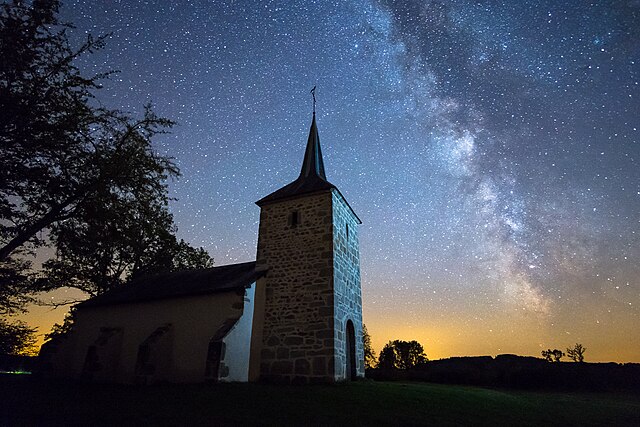
  1. Savault Chapel in a clear starry night, in Ouroux-en-Morvan, Bourgogne, France.
    Photograph by Benh LIEU SONG, image from Wikipedia
  2. Milky Way Photo of Poulnabrone Dolmen, The Burren, Co Clare, Ireland.
    Photograph by Frank Chandler, image from Wikipedia
  3. Milky Way in the night sky over Black Rock Desert, Nevada.
    Photograph by Steve Jurvetson, image from Wikipedia
  4. Milky Way from Concordia Camp, in Pakistan’s Karakoram Range.
    Photograph by Anne Dirkse, image from Wikipedia
  5. Cover of The Story Girl by L.M. Montgomery, image from Wikipedia.


Posted in cosmology, fiction, literature, photos | Tagged , , , , , , , , , | 1 Comment

Special snowflakes

“Folks that has brought up children know that there’s no hard and fast method in the world that’ll suit every child. But them as never have think it’s all as plain and easy as Rule of Three – just set your three terms down so fashion, and the sum’ll work out correct.”
from Anne of Green Gables, by L. M. Montgomery

Mrs. Lynde, the fictional character who made this observation about a hundred years ago, was a little-educated farmer’s wife from Prince Edward Island (Canada). Grumbling about her friend’s educational methods, she claimed that all children are different and that one should adjust instruction to suit each child’s individual character and needs. Since then, many parents and educators came to accept and promote an individualistic approach. Others claim that such an approach imbues children and young adults with a sense of entitlement. The expression special snowflake became a derogatory metaphor for a person convinced “that one (or often, one’s child) is, in some way, special and should therefore be treated differently than others”. Those who deride human ‘Special Snowflakes’ expectations, often point to the similarity between people and snowflakes. We, are all different, just like snowflakes, but the little variations existing between people are insufficient to make us special. Obviously, people are way more complex than snowflakes. Yet, even for snowflakes, a question arises: are they quite similar or unique?

Around the same time L. M. Montgomery wrote Anne of Green Gables, Wilson Alwyn Bentley developed a technique to film snow crystals placed under microscope. Bentley, who captured more than 5,000 images of snow crystals in his lifetime, argued that no two snowflakes were alike. Continue reading

Posted in fiction, photos, physics | Tagged , , , , , , , , | 3 Comments

Celestial whisper – science-fiction or frontiers of cosmology?

roftjGalaxyView

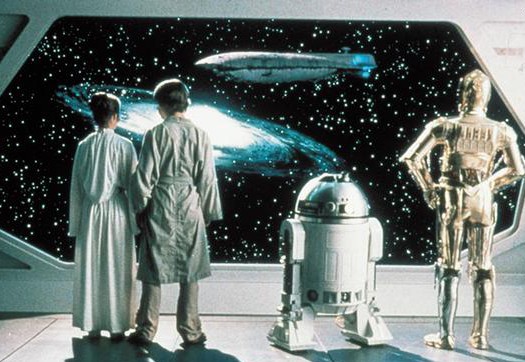
Starlight dotting the seemingly empty space is a beautiful and inspiring sight, one that can be an impressive backdrop in a movie or a setting in a novel. But what if along with the spectacular view comes a piece of information that the space is permeated with sound? Will you dismiss the scene as nonsensical, badly executed science-fiction, or will you be willing to suspend your disbelief for a while?

My guess is that even those comfortable with wormholes, aliens, and Greedo firing first, won’t easily accept sound traveling through vast distances of space. Looking at space beyond the “cozy” confines of our solar system, one usually perceives it as mostly empty and absolutely quiet. So, shouldn’t we be skeptical about sound waves stretching as far as half a billion light years (about a hundred and fifty million parsecs, or about two hundred times the distance between Milky Way and Andromeda)?

Although celestial sound might seem too weird for science-fiction, existence of sound waves dating from early universe was theoretically predicted in the late 1960s (by Peebles and Yu of Princeton University and by Zel’dovich and Sunyaev of the Moscow Institute of Applied Mathematics). In 2005, a group of researchers from the Sloan Digital Sky Survey, detected the acoustic peak in a luminous red galaxy sample. Since then, celestial sound, more commonly known as Baryon Acoustic Oscillations (or BAO), has been used as a standard ruler to study dark energy. For those curious, here is a very brief account of the origins of this primordial sound.

Many things have changed since the Big Bang, but not the fact that the universe we observe is expanding and cooling. Once upon a time (or some 13.7 billion year ago, a few minutes after the Big Bang), the universe was so much denser and hotter that massive particles moved with velocities close to the speed of light, collided with each other and darted away. Photons were also part of the mixture, frequently scattering from electrons, which combined and separated from protons. While the distances between particles grew as universe expanded, they collided frequently enough to maintain an equilibrium, so photons, electrons and protons behaved as a single (ionized) gas. This gas was distributed almost evenly (homogeneously and isotropically) in space, but there were small fluctuations in its density. Like with sound waves in the air, tiny density differences resulted in compression and rarefaction in the particles gas. Pressure exerted by the photons kept spots with surplus of massive particles from aggregating under the pull of gravity (like dark matter was doing meanwhile). Compression drove the over dense regions to expand, until they became under-dense, then gravity pulled them back. The result of this pull and push was sound waves propagating through the ionized gas. At the early stage, the speed of these sound waves was comparable to the speed light!

As universe continued cooling and expanding, the particles’ density gradually diluted. Massive particles like electrons and protons lost much of their kinetic energy. The speed of the sound waves also slowed. When the universe was about 400,000 years old, electrons and protons cooled enough to combine into stable hydrogen atoms. Having no electrons left to scatter from, photons decoupled from matter, and started their free stream through space. This radiation, known as Cosmic Microwave Background (CMB), permeates space and provides astronomers with a snapshot of tiny temperature (and consequently – density) differences in the universe at the times of photons’ last scattering (during the recombination between protons and electrons to hydrogen atoms).

So much had happened in universe in the intervening time (this is about 13.3 billion years), that one might wonder how these sound waves could ever be detected. Left without the motive force of photons’ pressure, baryons (most of the weight of ordinary matter comes from protons and neutrons, which are baryons) remained overdense in a shell of a radius about 500,000 light years (about 150Kpc). As the universe expanded about 1000-fold since the recombination, nowadays, each shell stretches to nearly one billion light-years across (radius of about 150MPc)! This mind-boggling distance is actually what prevented the imprint of the primordial sound waves from washing out. The processes that caused matter to clump together and eventually form stars, galaxies and other celestial structures, broadened the width of the shell, but not much else. Why so? Gravitational collapse and galaxy formation are relevant on a length scale of about 30 million light years (10 Mpc) and smaller. Acoustic imprints on that length scale were indeed either smeared or wiped out, but on BAO length scale of a half a billion light years, “local” phenomena had very small affect.


Note: This blog post was inspired by Raymond & Beverly Sackler Lecture in Astrophysics, given by Daniel Eisenstein a few days ago. This lecture, titled “Dark Energy and Cosmic Sound” was not only “free and open to the public,” but one of the liveliest cosmology talks I have attended.

For those who are intrigued to find out more, a non-technical article, titled “The Cosmic Symphony” by Wayne Hu and Martin White was published in Scientific American (2004). A pdf of the paper is available on professor Hu’s website. A comprehensive review of the observational probes of dark energy, including a chapter on the BAO method is available through the arXiv (here).

Posted in Big Bang, cosmology, physics, science fiction | Tagged , , , , , , , | 1 Comment

NaNoWriMo, word by word


I participated in the NaNoWriMo 2015 writing challenge.
And, it’s done!
Happy. Tired. Cannot think of more words…
Here are screenshots from my NaNoWriMo dashboard:

TKF_NaNoWriMo2015_a


Posted in fiction, mainstream fiction, writing | Tagged , , , , , | 3 Comments

The art of inspiration

The man for wisdom’s various arts renown’d,
Long exercised in woes, O Muse! resound;
Who, when his arms had wrought the destined fall
Of sacred Troy, and razed her heaven-built wall,
Wandering from clime to clime, observant stray’d,
Their manners noted, and their states survey’d,
On stormy seas unnumber’d toils he bore,
Safe with his friends to gain his natal shore:
Vain toils! their impious folly dared to prey
On herds devoted to the god of day;
The god vindictive doom’d them never more
(Ah, men unbless’d!) to touch that natal shore.
Oh, snatch some portion of these acts from fate,
Celestial Muse! and to our world relate.

Homer, beginning of The Odyssey.
Translation by Alexander Pope.
(Text from Project Gutenberg)

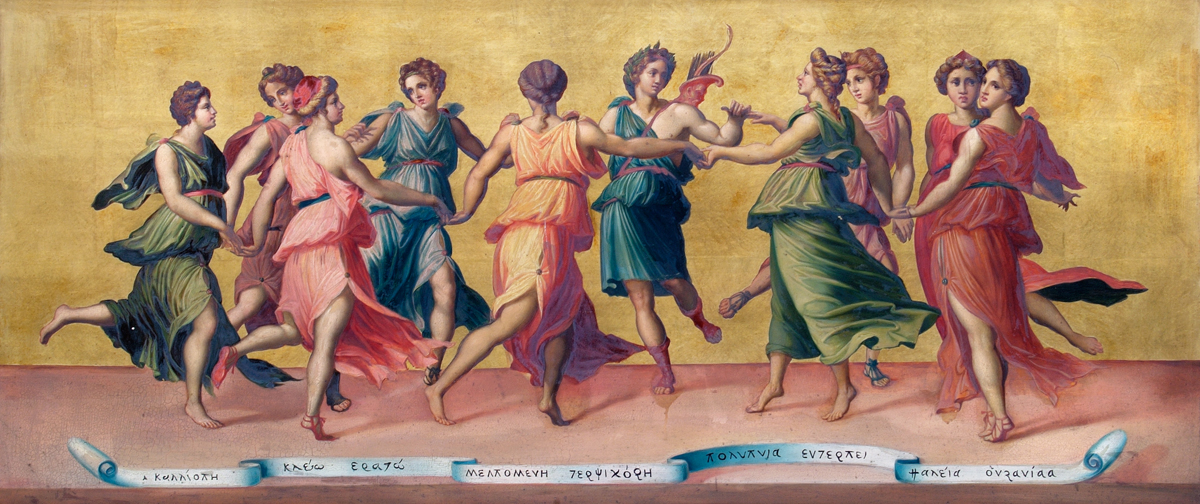
The Muses – in Greek mythology are the goddesses of the inspiration of literature, science, and the arts. They were considered the source of the knowledge embodied in the poetry, song-lyrics, and myths that were related orally for centuries in these ancient cultures. They were later adopted by the Romans as a part of their pantheon. (Wikipedia)

In current English usage, “muse” can refer in general to a person who inspires an artist, writer, or musician.

THE MOUSAI (Muses) were the goddesses of music, song and dance, and the source of inspiration to poets. They were also goddesses of knowledge, who remembered all things that had come to pass.
Later the Mousai were assigned specific artistic spheres: Kalliope, epic poetry; Kleio, history; Ourania, astronomy; Thaleia, comedy; Melpomene, tragedy; Polyhymnia, religious hymns; Erato, erotic poetry; Euterpe, lyric poetry; and Terpsikhore, choral song and dance.
(Cited from the Theoi Project, a site exploring Greek mythology and the gods in classical literature and art.)


The Nine Mousai – mosaic from Roman Imperial period
(Museum Collection: Archaeological Museum of Cos, Greece)


Dance of Apollo and the Muses. By Baldassare Peruzzi, c.1510. Image from Wikimedia


Apollo and the Muses on Mount Parnassus. By Simon Vouet, c.1640. Image fromWeb Gallery of Art


Apollo and the Muses. By John Singer Sargent, 1921. Image from Museum of Fine Arts, Boston


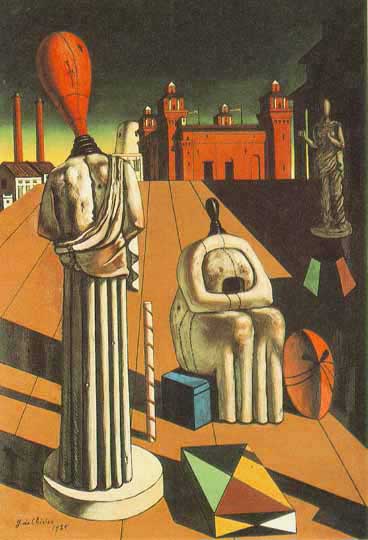
A 1947 replica of The Disquieting Muses (original 1916-1918), by Giorgio de Chirico
At the front are the two Muses, dressed in classical clothing. One is standing and the other sitting, and they are placed among various objects, including a red mask and staff, an allusion to Melpomene and Thalia, the Muses of tragedy and comedy.


Rita Heyworth as Muse Terpsichore, in 1947 film Down to Earth


Olivia Newton-John and other muses in the 1980 film Xanadu


Muses, from Disney film Hercules, 1997.

Posted in fiction, literature, magical realism, movies, photos | Tagged , , , , | 1 Comment

Who is looking for high-stakes, cutting-edge cosmology?

“At eleven sharp, Susan Brophy introduced Mathias Kramer and stepped aside to let him say all the appropriate things. As soon as the lights were dimmed, the audience saw a pair of huge, flaming jets move on the screen. The jets shifted, changed course, and gradually started to swirl. Drawn to the fiery spouts, most of the eyes did not notice a small, spinning black sphere in the middle of the screen. It looked innocuous, unless one realized that the jets could not break out of the eye of the storm’s irresistible grip. They spiraled inward, moving closer and closer, dancing with excruciating slowness all the way to the rim of the restless, devouring blackness.
The dramatic demonstration of accretion of matter by a rotating black-hole was followed by a slide with Einstein equations. Other slides methodically expounded a solution to these equations under simplifying assumptions. Danielle more or less understood the mathematical expressions on the first five or six slides. After the tenth, she began to lose the gist. She noted that Chi, who sat one chair to the right, stared at the slides with a glazed expression. Ben, who sat a couple of chairs to the left, did not even bother to look at the screen.
From Initial Conditions

Realistic? Ask anyone who has attended physics seminars (especially those on cosmology). Continue reading

Posted in cosmology, disruptive technology, fiction, physics, science fiction | Tagged , , , , | Leave a comment