Celestial whisper – science-fiction or frontiers of cosmology?

roftjGalaxyView

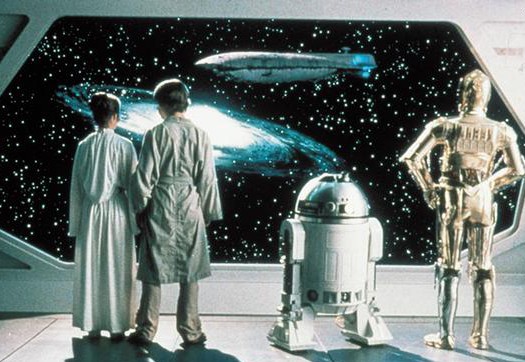
Starlight dotting the seemingly empty space is a beautiful and inspiring sight, one that can be an impressive backdrop in a movie or a setting in a novel. But what if along with the spectacular view comes a piece of information that the space is permeated with sound? Will you dismiss the scene as nonsensical, badly executed science-fiction, or will you be willing to suspend your disbelief for a while?

My guess is that even those comfortable with wormholes, aliens, and Greedo firing first, won’t easily accept sound traveling through vast distances of space. Looking at space beyond the “cozy” confines of our solar system, one usually perceives it as mostly empty and absolutely quiet. So, shouldn’t we be skeptical about sound waves stretching as far as half a billion light years (about a hundred and fifty million parsecs, or about two hundred times the distance between Milky Way and Andromeda)?

Although celestial sound might seem too weird for science-fiction, existence of sound waves dating from early universe was theoretically predicted in the late 1960s (by Peebles and Yu of Princeton University and by Zel’dovich and Sunyaev of the Moscow Institute of Applied Mathematics). In 2005, a group of researchers from the Sloan Digital Sky Survey, detected the acoustic peak in a luminous red galaxy sample. Since then, celestial sound, more commonly known as Baryon Acoustic Oscillations (or BAO), has been used as a standard ruler to study dark energy. For those curious, here is a very brief account of the origins of this primordial sound.

Many things have changed since the Big Bang, but not the fact that the universe we observe is expanding and cooling. Once upon a time (or some 13.7 billion year ago, a few minutes after the Big Bang), the universe was so much denser and hotter that massive particles moved with velocities close to the speed of light, collided with each other and darted away. Photons were also part of the mixture, frequently scattering from electrons, which combined and separated from protons. While the distances between particles grew as universe expanded, they collided frequently enough to maintain an equilibrium, so photons, electrons and protons behaved as a single (ionized) gas. This gas was distributed almost evenly (homogeneously and isotropically) in space, but there were small fluctuations in its density. Like with sound waves in the air, tiny density differences resulted in compression and rarefaction in the particles gas. Pressure exerted by the photons kept spots with surplus of massive particles from aggregating under the pull of gravity (like dark matter was doing meanwhile). Compression drove the over dense regions to expand, until they became under-dense, then gravity pulled them back. The result of this pull and push was sound waves propagating through the ionized gas. At the early stage, the speed of these sound waves was comparable to the speed light!

As universe continued cooling and expanding, the particles’ density gradually diluted. Massive particles like electrons and protons lost much of their kinetic energy. The speed of the sound waves also slowed. When the universe was about 400,000 years old, electrons and protons cooled enough to combine into stable hydrogen atoms. Having no electrons left to scatter from, photons decoupled from matter, and started their free stream through space. This radiation, known as Cosmic Microwave Background (CMB), permeates space and provides astronomers with a snapshot of tiny temperature (and consequently – density) differences in the universe at the times of photons’ last scattering (during the recombination between protons and electrons to hydrogen atoms).

So much had happened in universe in the intervening time (this is about 13.3 billion years), that one might wonder how these sound waves could ever be detected. Left without the motive force of photons’ pressure, baryons (most of the weight of ordinary matter comes from protons and neutrons, which are baryons) remained overdense in a shell of a radius about 500,000 light years (about 150Kpc). As the universe expanded about 1000-fold since the recombination, nowadays, each shell stretches to nearly one billion light-years across (radius of about 150MPc)! This mind-boggling distance is actually what prevented the imprint of the primordial sound waves from washing out. The processes that caused matter to clump together and eventually form stars, galaxies and other celestial structures, broadened the width of the shell, but not much else. Why so? Gravitational collapse and galaxy formation are relevant on a length scale of about 30 million light years (10 Mpc) and smaller. Acoustic imprints on that length scale were indeed either smeared or wiped out, but on BAO length scale of a half a billion light years, “local” phenomena had very small affect.


Note: This blog post was inspired by Raymond & Beverly Sackler Lecture in Astrophysics, given by Daniel Eisenstein a few days ago. This lecture, titled “Dark Energy and Cosmic Sound” was not only “free and open to the public,” but one of the liveliest cosmology talks I have attended.

For those who are intrigued to find out more, a non-technical article, titled “The Cosmic Symphony” by Wayne Hu and Martin White was published in Scientific American (2004). A pdf of the paper is available on professor Hu’s website. A comprehensive review of the observational probes of dark energy, including a chapter on the BAO method is available through the arXiv (here).


Posted in Big Bang, cosmology, physics, science fiction | Tagged , , , , , , , | 1 Comment

NaNoWriMo, word by word


I participated in the NaNoWriMo 2015 writing challenge.
And, it’s done!
Happy. Tired. Cannot think of more words…
Here are screenshots from my NaNoWriMo dashboard:

TKF_NaNoWriMo2015_a


Posted in fiction, mainstream fiction, writing | Tagged , , , , , | 3 Comments

The art of inspiration

The man for wisdom’s various arts renown’d,
Long exercised in woes, O Muse! resound;
Who, when his arms had wrought the destined fall
Of sacred Troy, and razed her heaven-built wall,
Wandering from clime to clime, observant stray’d,
Their manners noted, and their states survey’d,
On stormy seas unnumber’d toils he bore,
Safe with his friends to gain his natal shore:
Vain toils! their impious folly dared to prey
On herds devoted to the god of day;
The god vindictive doom’d them never more
(Ah, men unbless’d!) to touch that natal shore.
Oh, snatch some portion of these acts from fate,
Celestial Muse! and to our world relate.

Homer, beginning of The Odyssey.
Translation by Alexander Pope.
(Text from Project Gutenberg)

The Muses – in Greek mythology are the goddesses of the inspiration of literature, science, and the arts. They were considered the source of the knowledge embodied in the poetry, song-lyrics, and myths that were related orally for centuries in these ancient cultures. They were later adopted by the Romans as a part of their pantheon. (Wikipedia)

In current English usage, “muse” can refer in general to a person who inspires an artist, writer, or musician.

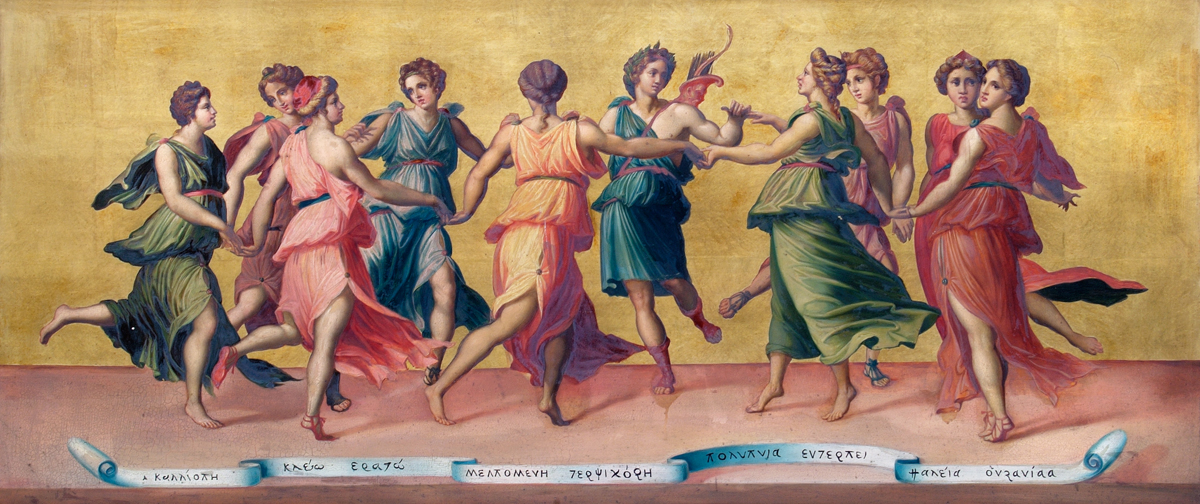
THE MOUSAI (Muses) were the goddesses of music, song and dance, and the source of inspiration to poets. They were also goddesses of knowledge, who remembered all things that had come to pass.
Later the Mousai were assigned specific artistic spheres: Kalliope, epic poetry; Kleio, history; Ourania, astronomy; Thaleia, comedy; Melpomene, tragedy; Polyhymnia, religious hymns; Erato, erotic poetry; Euterpe, lyric poetry; and Terpsikhore, choral song and dance.
(Cited from the Theoi Project, a site exploring Greek mythology and the gods in classical literature and art.)


The Nine Mousai – mosaic from Roman Imperial period
(Museum Collection: Archaeological Museum of Cos, Greece)


Dance of Apollo and the Muses. By Baldassare Peruzzi, c.1510. Image from Wikimedia


Apollo and the Muses on Mount Parnassus. By Simon Vouet, c.1640. Image fromWeb Gallery of Art


Apollo and the Muses. By John Singer Sargent, 1921. Image from Museum of Fine Arts, Boston


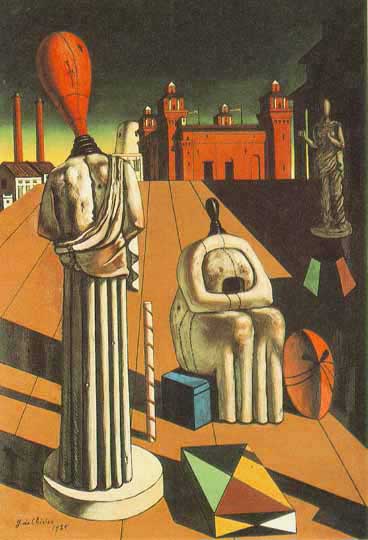
A 1947 replica of The Disquieting Muses (original 1916-1918), by Giorgio de Chirico
At the front are the two Muses, dressed in classical clothing. One is standing and the other sitting, and they are placed among various objects, including a red mask and staff, an allusion to Melpomene and Thalia, the Muses of tragedy and comedy.


Rita Heyworth as Muse Terpsichore, in 1947 film Down to Earth


Olivia Newton-John and other muses in the 1980 film Xanadu


Muses, from Disney film Hercules, 1997.

Posted in fiction, literature, magical realism, movies, photos | Tagged , , , , | 1 Comment

Who is looking for high-stakes, cutting-edge cosmology?

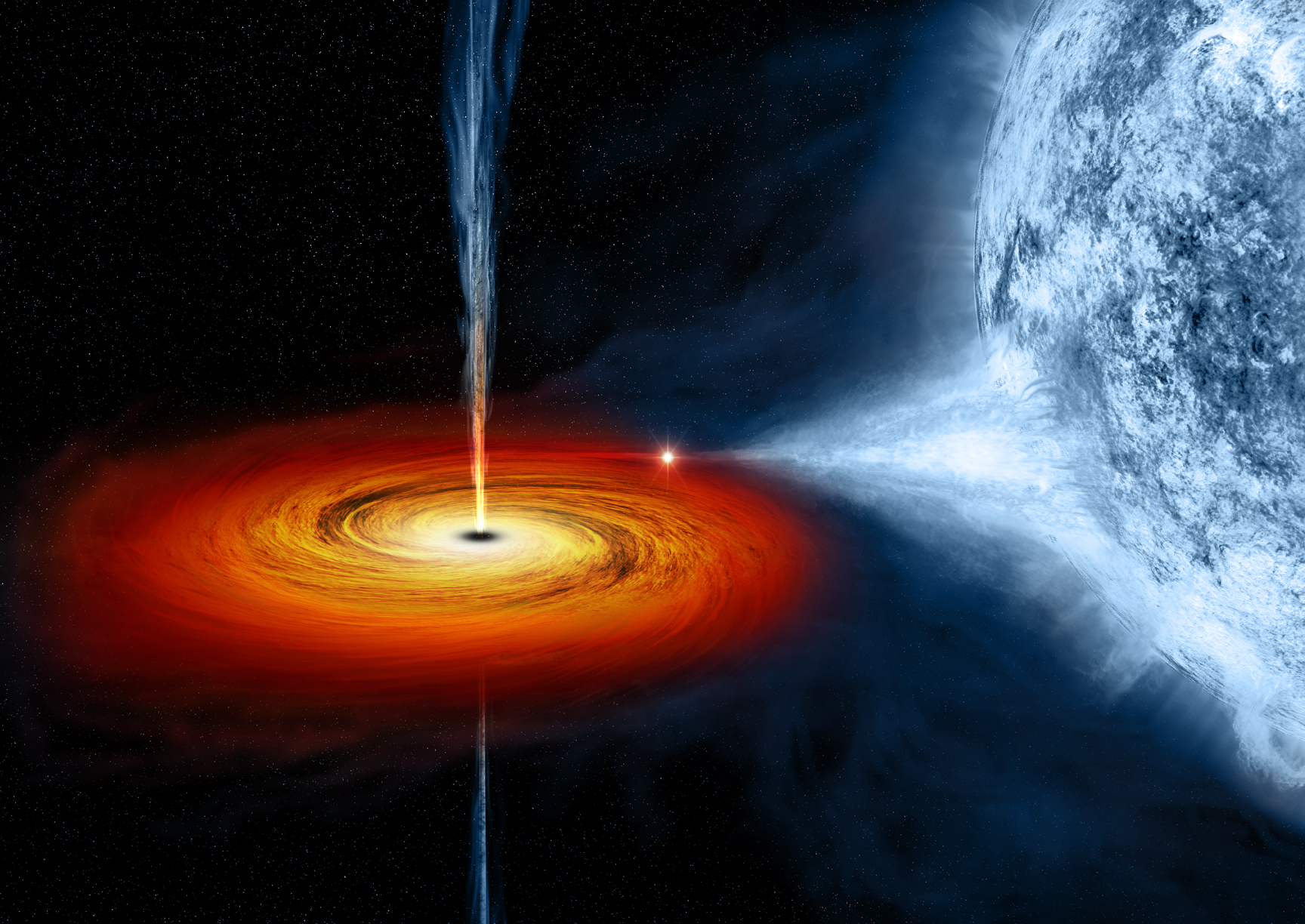
“At eleven sharp, Susan Brophy introduced Mathias Kramer and stepped aside to let him say all the appropriate things. As soon as the lights were dimmed, the audience saw a pair of huge, flaming jets move on the screen. The jets shifted, changed course, and gradually started to swirl. Drawn to the fiery spouts, most of the eyes did not notice a small, spinning black sphere in the middle of the screen. It looked innocuous, unless one realized that the jets could not break out of the eye of the storm’s irresistible grip. They spiraled inward, moving closer and closer, dancing with excruciating slowness all the way to the rim of the restless, devouring blackness.
The dramatic demonstration of accretion of matter by a rotating black-hole was followed by a slide with Einstein equations. Other slides methodically expounded a solution to these equations under simplifying assumptions. Danielle more or less understood the mathematical expressions on the first five or six slides. After the tenth, she began to lose the gist. She noted that Chi, who sat one chair to the right, stared at the slides with a glazed expression. Ben, who sat a couple of chairs to the left, did not even bother to look at the screen.
From Initial Conditions

Realistic? Ask anyone who has attended physics seminars (especially those on cosmology). Continue reading →

Posted in cosmology, disruptive technology, fiction, physics, science fiction | Tagged , , , , | Leave a comment

The Typewriter and other classics from the ’50s

Guest post by mèþru (TK’s beta reader)

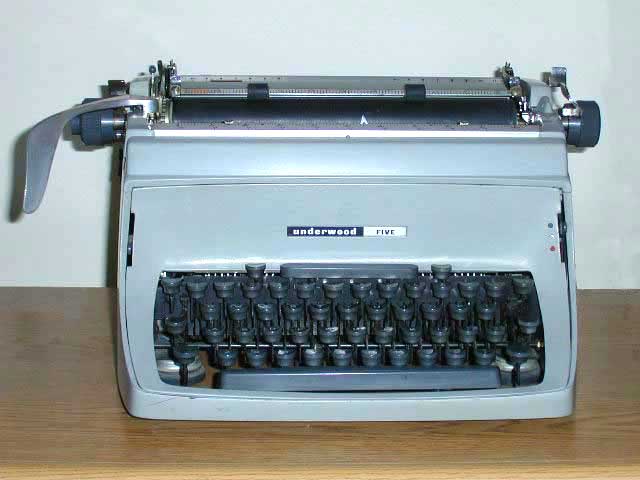
To all NaNoWriMo writers, for really fast typing:
Leroy Anderson – The Typewriter (1950)

Here are some songs I like from the ’50s. Continue reading →

Posted in writing | Tagged , , , , , , , , , | 1 Comment

NaNoWriMo – a self-imposed adventure

I love deadlines.
I love the whooshing noise they make as they go by.
Douglas_Adams, The Salmon of Doubt.

November is the NaNoWriMo month!
According to NaNoWriMo site:
National Novel Writing Month (NaNoWriMo) is a fun, seat-of-your-pants approach to creative writing. Participants work toward the goal of writing a 50,000-word draft during the month of November. Valuing enthusiasm, determination, and a deadline, NaNoWriMo is for anyone who has ever thought fleetingly about writing a novel.

It has its pros and cons.

Pros:

  1. Free
  2. Open to professionals, hobbyists and practically to everyone with internet access. No one asks for credentials, recommendations or previous sales figures.
  3. The genre does not matter, and even lack of thereof.
  4. No one is going to read it, so even if the draft it awful, there won’t be public humiliation.
  5. Fun (or so Tara Sparling claims)
  6. An opportunity to look like a real-writer while importantly pointing to the deadline and saying firmly, “I’m busy, really busy, extremely busy”.

The cons:

  1. Having to truthfully answer inquiries about how the writing is progressing.
  2. No one will bother to ask how the writing is progressing.
  3. Ending the year with copious amounts of frenzied writing I’ll have to rewrite.
  4. Actually writing 50,000 words. In. A. Month.

Any advice?
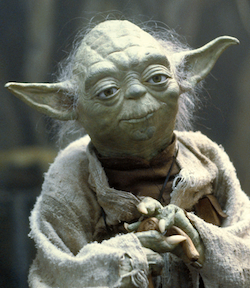
“Do. Or do not. There is no try.”


Posted in fiction, literature, writing | Tagged , , | 2 Comments

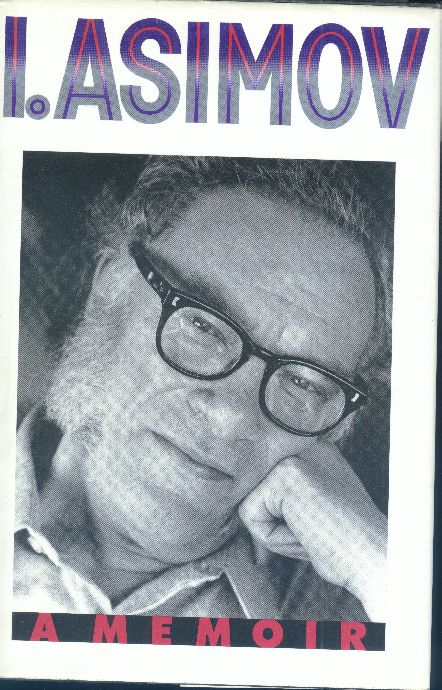
The joy of being prolific – notes from Asimov’s memoirs

“His notion of cracking an egg is to shoot a nuclear blast at it.”
“Stay with me, Lepold, and don’t worry about them. Together we will recreate an empire…”
 (from Foundation, by Isaac Asimov)

When twenty-one year old Isaac Asimov told the editor of Astounding, John Wood Campbell, about his intention to explore the political, social and technological deterioration of a futuristic empire, Campbell “wanted not a single story, but a long open-ended saga, of the fall of the Galactic Empire, the Dark Ages that Followed, and the eventual rise of a Second Galactic Empire, all mediated by the invented science of ‘psychohistory,’ which enabled skilled psychohistorians to predict the mass currents of future history.” Continue reading →

Posted in fiction, science fiction, writing | Tagged , , , | 5 Comments

Publish or Perish – academia and self-publishing

“He published frantically while he was a post-doc and junior faculty…”
From Initial Conditions

Fast Solar Wind Causes Aurora Light ShowsWhen Danielle, the protagonist of Initial Conditions, wants to work on the recently-discovered dark energy, her new boss dissuades her, noting that “in a post-doctorate, you focus on obtaining publishable results, not plunging unprepared into a new field.” Such a reply sounds dismissing but is hardly surprising – in academia, scientist’s work is often evaluated by the amount of the published papers s/he generates. With the exception for rare, groundbreaking discoveries, even a very good scientist is unlikely to succeed without publishing regularly in high-impact scholarly journals.

Today I read on The Passive Voice about a recent study that analyzed millions of biomedical abstracts. The authors found that:

“researchers who confine their work to answering established questions are more likely to have the results published, which is a key to career advancement in academia. Conversely, researchers who ask more original questions and seek to forge new links in the web of knowledge are more likely to stumble on the road to publication, which can make them appear unproductive to their colleagues.”

So, publishing often and avoiding risk-taking usually pays off in academia. Apparently, this also works in self-publishing. According to best-selling author Russell Blake:

“…the secret was to put out a new volume every sixty days so your name appears on the hot new releases list with regularity and momentum is built with readers, and never forget that you’re there to entertain your readership – not to get too clever, or if you’re bored, change things up for your amusement. It’s a job. Do the work, do it well, and maybe you get paid for a while. That’s the secret.
I’ve given that advice to plenty of authors: pick a genre that can support your aspirations, write to reasonable quality for the genre’s expectations and publish with astonishing regularity, put forth a pro package, and pay attention to what’s working.”

I can only speculate on why this mentality of publishing what is merely good enough prevails in milieus as different as establishment-sponsored academia and indie writers. In a market with millions of books, visibility and discoverability are major problems. Big publishers invest a lot of money to push the few books they expect to become best-sellers; self-publishers lack the means to adequately push their work. According to Blake, constant production of acceptable (by readers) content is the key to how self-publishers can bypass this hurdle. First, by constantly releasing new material, they keep their books in readers’ mind. Second, and at least as important as first, is that retailer’s algorithms place “hot new releases” in front of potential buyers’ eyes. This enhanced visibility is golden as it increases the book’s chances to be bought. And when this is repeated every month or two or three, the author might be paid enough to live from his/her writing.

Universities, on the other hand, do not pay researchers by the number of papers they publish every year, and hopefully, automated algorithms have no say in who will climb the rungs of academic career. So, different arguments should explain why scientists publish often, even when they have nothing exciting to report about. According to the cited research, “evidence points to a simple explanation: Innovative research is a gamble whose payoff, on average, does not justify the risk. It’s not a reliable way to accumulate scientific reward.”

This conclusion is not new, but nevertheless, it makes me wonder why efficient productivity is better rewarded than creativity. Why dedicated, talented people are encouraged to produce more of the same even in fields where making a profit is not on the agenda, and where decisions are made not by mindless algorithms but by highly educated people sitting in respected committees?

Image from Johnny Henriksen/Spaceweather.com via nasa.gov

Posted in academia, fiction, self-publishing | Tagged , , , , , , | 3 Comments

Gravity – humor, history, and some facts

Hungarian stamp commemorating 100 years of general relativity. Image from philatelicdatabase.com

…: “Gravity, where did it come from?”
when a four-dimensional pseudo-Riemannian manifold and a Landau–Lifshitz stress-energy tensor love each other very much, they produce a geodesic in curved spacetime. And that’s the story of gravity.

Thanks to Dr. Science at Mother Jones magazine for coming up with a compelling theory of gravity. I had never expected to read about a “four-dimensional pseudo-Riemannian manifold” and “Landau–Lifshitz stress-energy tensor” in a piece about presidential campaign :-). Moreover, it’s one of the most hilarious pieces to remember from the celebration of 100 years of General Relativity.

“Einstein arrived at the general theory of relativity after thinking for eight years about gravitation… The final steps leading to his November 25, 1915, paper were made in an intense burst of activity that lasted for less than two months.”
(Abraham Pais, Subtle is the Lord)

Einstein equation entwines the curvature of spacetime (spacetime is the aforementioned “four-dimensional pseudo-Riemannian manifold”) and motion of material objects embodied in that spacetime (the energy and momentum of these objects are described by the aforementioned “Landau–Lifshitz stress-energy tensor”). “Love” is complicated, but so is the mathematics used to formulate and solve the equations of general relativity. The aforementioned geodesics are lines that “curve as little as possible” so they are the shortest distance between two points in a curved geometry. According to general relativity, small, light (‘test’) bodies move along these geodesics.

Complicated? Notoriously so, yet general relativity is considered the most beautiful physical theory ever invented. In addition to its elegance, the theory has been repeatedly tested. And everything works as predicted!

PS. When “a four-dimensional pseudo-Riemannian manifold” and “a Landau–Lifshitz stress-energy tensor” do not love each other that much and things move pretty slow (as compared to the speed of light), Einstein equations reduce to the familiar Newtonian gravity. For every practical intent, apples still fall down in a straight line.


The 1987 British set of stamps, designed to commemorate the 300th anniversary of Isaac Newton’s Philosophiae Naturalis Principia Mathematica. Image from Ian Ridpath


Posted in cosmology, physics | Tagged , , , , , , , | Leave a comment

Three Sisters Island trilogy: meet Air, Earth, Fire and … Water

Image from http://lamagiadeloselementos.blogspot.com/
Ancient Greek philosophers thought that everything in the world was made out of four elements: earth, fire, water and air. This belief in four fundamental elements lasted throughout the Middle Ages, until the advent of the Scientific Revolution in the sixteenth and the seventeenth centuries. Exploration, inventions and scientific discoveries led to expansion of knowledge that changed people’s beliefs and widened their horizons. There were exceptions. As late as 1692, villagers in Salem, Massachusetts, did not bother to look for or care about facts. In their zealous hunt of witches, they hounded and murdered innocent women.

Dance Upon The Air, by Nora Roberts opens with a story of three sisters, known as Air, Earth and Fire. While terror reigned in Salem, these witches forged an island that would become their sanctuary:

“Away from hate let this land be torn. Lift if from fear, from death and scorn. Crave rock, crave tree, crave hill and stream. Carry us with it on midsummer moonbeam. Out past the cliff and out past the shore, to be severed from this land forever more. We take our island out to the sea. As we will, so mote it be.”

Fast forward three hundred years, and the quaint Three Sisters Island is thriving. Tourists enjoy its beaches and shops during the summer months, crime is practically non-existent, witchcraft and magic are limited to local lore and to souvenirs for the interested visitors. Or so it looks, for where would fiction be if magic perfectly solved everything and then vanished?

Nell Channing is young, pretty and talented, yet she lives in constant fear. It has not been long since she had risked her life to escape from years of soul-destroying marital abuse. She trusts no one when she comes to the Three Sisters Island, yet the beauty of the place and a mysterious sense of kinship lead her to stay on the island.

In Cafe Book, Nell finds more than a sympathetic boss and a day job. Despite the risk, she makes friends and tries to rebuild her life. Since this is a romance, a very appealing guy steps into Nell’s live. Sheriff Zack Todd is drawn to the beautiful woman, but Nell’s good looks and exceptional cooking is only part of the package. Before long, Zack will have to deal with Nell’s wariness of physical contact, with the lies she feels compelled to tell, and later on with the fact he is having sex with a woman married to someone else. Since this is Nora Roberts’ book, Nell and Zack’s love is only part of the story. Nell’s possessive-abusive husband finds out that she is alive. Nell learns about her connection to the witch Air and gets to know the descendants of Earth and Fire, who still live on the island…

I enjoyed the stories entwined in Dance Upon The Air, I and recommend the book to anyone who would like to take a vacation on a beautiful island, and doesn’t mind witches fighting ancient evil while savoring mouthwatering cream puffs.

I read other books in the trilogy straight after the first. Heaven and Earth focuses on the love between Zack’s sister and a wealthy but clumsy researcher who comes to the Three Sisters Island to investigate the rumors that there are still practicing witches on the island.

The last book is Face The Fire. Mia Devlin is amazingly beautiful, forcefully independent, rich and successful. Although she is used to do everything her own way, Mia’s life is far from being perfect. Years ago, she was ditched by the only man she had ever loved. Now, she is targeted by magical evil. Her own and lives of those she loves are at stake. Moreover, if she does not break the three hundred years old curse, the entire island is in danger of sinking into the sea like Atlantis. It takes Nora Roberts to convincingly resolve Mia’s challenges. I especially enjoyed how she wove in the legend of Selkie, and finally meeting the fourth element, the Water.

Dance Upon The AirHeaven And EarthFace The Fire
Book images from noraroberts.com. The four elements image from lamagiadeloselementos


Posted in contemporary romance, fiction, magical realism | Tagged , , , , , , , | Leave a comment