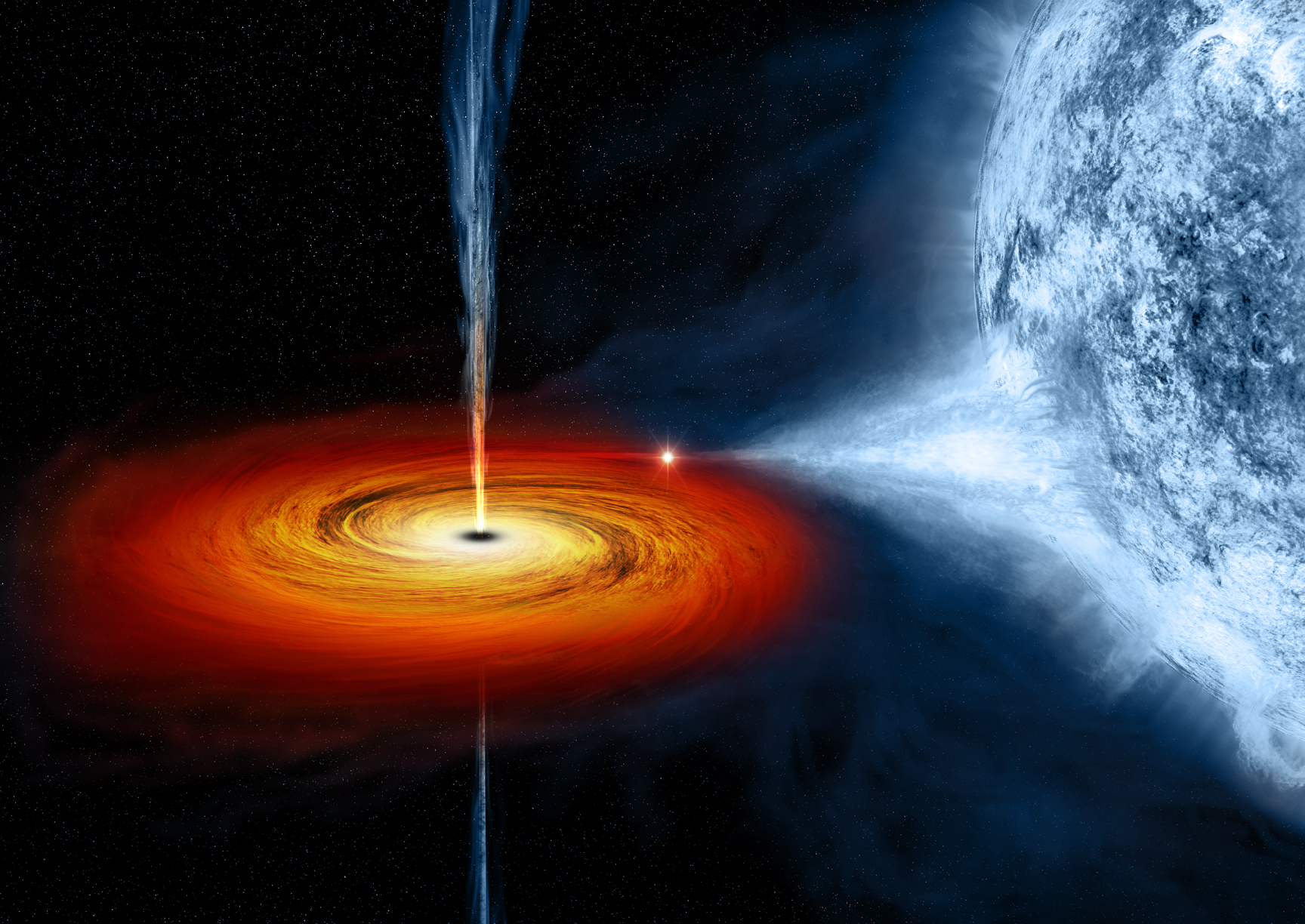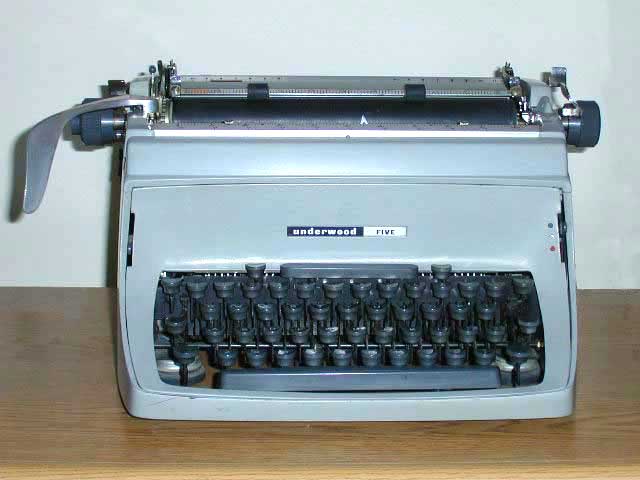
The Typewriter and other classics from the ’50s

Guest post by mèþru (TK’s beta reader)

To all NaNoWriMo writers, for really fast typing:
Leroy AndersonThe Typewriter (1950)

Here are some songs I like from the ’50s. Continue reading

Posted in writing | Tagged , , , , , , , , , | 1 Comment

NaNoWriMo – a self-imposed adventure

I love deadlines.
I love the whooshing noise they make as they go by.
Douglas_Adams, The Salmon of Doubt.

November is the NaNoWriMo month!
According to NaNoWriMo site:
National Novel Writing Month (NaNoWriMo) is a fun, seat-of-your-pants approach to creative writing. Participants work toward the goal of writing a 50,000-word draft during the month of November. Valuing enthusiasm, determination, and a deadline, NaNoWriMo is for anyone who has ever thought fleetingly about writing a novel.

It has its pros and cons.

Pros:

  1. Free
  2. Open to professionals, hobbyists and practically to everyone with internet access. No one asks for credentials, recommendations or previous sales figures.
  3. The genre does not matter, and even lack of thereof.
  4. No one is going to read it, so even if the draft it awful, there won’t be public humiliation.
  5. Fun (or so Tara Sparling claims)
  6. An opportunity to look like a real-writer while importantly pointing to the deadline and saying firmly, “I’m busy, really busy, extremely busy”.

The cons:

  1. Having to truthfully answer inquiries about how the writing is progressing.
  2. No one will bother to ask how the writing is progressing.
  3. Ending the year with copious amounts of frenzied writing I’ll have to rewrite.
  4. Actually writing 50,000 words. In. A. Month.

Any advice?
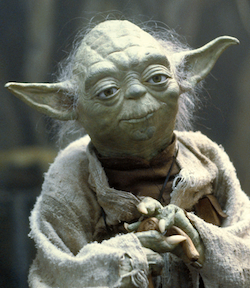
“Do. Or do not. There is no try.”


Posted in fiction, literature, writing | Tagged , , | 2 Comments

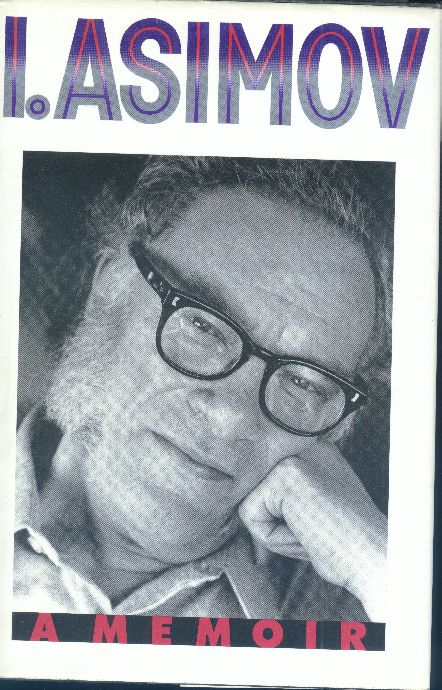
The joy of being prolific – notes from Asimov’s memoirs

“His notion of cracking an egg is to shoot a nuclear blast at it.”
“Stay with me, Lepold, and don’t worry about them. Together we will recreate an empire…”
 (from Foundation, by Isaac Asimov)

When twenty-one year old Isaac Asimov told the editor of Astounding, John Wood Campbell, about his intention to explore the political, social and technological deterioration of a futuristic empire, Campbell “wanted not a single story, but a long open-ended saga, of the fall of the Galactic Empire, the Dark Ages that Followed, and the eventual rise of a Second Galactic Empire, all mediated by the invented science of ‘psychohistory,’ which enabled skilled psychohistorians to predict the mass currents of future history.” Continue reading

Posted in fiction, science fiction, writing | Tagged , , , | 5 Comments

Publish or Perish – academia and self-publishing

“He published frantically while he was a post-doc and junior faculty…”
From Initial Conditions

Fast Solar Wind Causes Aurora Light ShowsWhen Danielle, the protagonist of Initial Conditions, wants to work on the recently-discovered dark energy, her new boss dissuades her, noting that “in a post-doctorate, you focus on obtaining publishable results, not plunging unprepared into a new field.” Such a reply sounds dismissing but is hardly surprising – in academia, scientist’s work is often evaluated by the amount of the published papers s/he generates. With the exception for rare, groundbreaking discoveries, even a very good scientist is unlikely to succeed without publishing regularly in high-impact scholarly journals.

Today I read on The Passive Voice about a recent study that analyzed millions of biomedical abstracts. The authors found that:

“researchers who confine their work to answering established questions are more likely to have the results published, which is a key to career advancement in academia. Conversely, researchers who ask more original questions and seek to forge new links in the web of knowledge are more likely to stumble on the road to publication, which can make them appear unproductive to their colleagues.”

So, publishing often and avoiding risk-taking usually pays off in academia. Apparently, this also works in self-publishing. According to best-selling author Russell Blake:

“…the secret was to put out a new volume every sixty days so your name appears on the hot new releases list with regularity and momentum is built with readers, and never forget that you’re there to entertain your readership – not to get too clever, or if you’re bored, change things up for your amusement. It’s a job. Do the work, do it well, and maybe you get paid for a while. That’s the secret.
I’ve given that advice to plenty of authors: pick a genre that can support your aspirations, write to reasonable quality for the genre’s expectations and publish with astonishing regularity, put forth a pro package, and pay attention to what’s working.”

I can only speculate on why this mentality of publishing what is merely good enough prevails in milieus as different as establishment-sponsored academia and indie writers. In a market with millions of books, visibility and discoverability are major problems. Big publishers invest a lot of money to push the few books they expect to become best-sellers; self-publishers lack the means to adequately push their work. According to Blake, constant production of acceptable (by readers) content is the key to how self-publishers can bypass this hurdle. First, by constantly releasing new material, they keep their books in readers’ mind. Second, and at least as important as first, is that retailer’s algorithms place “hot new releases” in front of potential buyers’ eyes. This enhanced visibility is golden as it increases the book’s chances to be bought. And when this is repeated every month or two or three, the author might be paid enough to live from his/her writing.

Universities, on the other hand, do not pay researchers by the number of papers they publish every year, and hopefully, automated algorithms have no say in who will climb the rungs of academic career. So, different arguments should explain why scientists publish often, even when they have nothing exciting to report about. According to the cited research, “evidence points to a simple explanation: Innovative research is a gamble whose payoff, on average, does not justify the risk. It’s not a reliable way to accumulate scientific reward.”

This conclusion is not new, but nevertheless, it makes me wonder why efficient productivity is better rewarded than creativity. Why dedicated, talented people are encouraged to produce more of the same even in fields where making a profit is not on the agenda, and where decisions are made not by mindless algorithms but by highly educated people sitting in respected committees?

Image from Johnny Henriksen/Spaceweather.com via nasa.gov

Posted in academia, fiction, self-publishing | Tagged , , , , , , | 3 Comments

Gravity – humor, history, and some facts

Hungarian stamp commemorating 100 years of general relativity. Image from philatelicdatabase.com

…: “Gravity, where did it come from?”
when a four-dimensional pseudo-Riemannian manifold and a Landau–Lifshitz stress-energy tensor love each other very much, they produce a geodesic in curved spacetime. And that’s the story of gravity.

Thanks to Dr. Science at Mother Jones magazine for coming up with a compelling theory of gravity. I had never expected to read about a “four-dimensional pseudo-Riemannian manifold” and “Landau–Lifshitz stress-energy tensor” in a piece about presidential campaign :-). Moreover, it’s one of the most hilarious pieces to remember from the celebration of 100 years of General Relativity.

“Einstein arrived at the general theory of relativity after thinking for eight years about gravitation… The final steps leading to his November 25, 1915, paper were made in an intense burst of activity that lasted for less than two months.”
(Abraham Pais, Subtle is the Lord)

Einstein equation entwines the curvature of spacetime (spacetime is the aforementioned “four-dimensional pseudo-Riemannian manifold”) and motion of material objects embodied in that spacetime (the energy and momentum of these objects are described by the aforementioned “Landau–Lifshitz stress-energy tensor”). “Love” is complicated, but so is the mathematics used to formulate and solve the equations of general relativity. The aforementioned geodesics are lines that “curve as little as possible” so they are the shortest distance between two points in a curved geometry. According to general relativity, small, light (‘test’) bodies move along these geodesics.

Complicated? Notoriously so, yet general relativity is considered the most beautiful physical theory ever invented. In addition to its elegance, the theory has been repeatedly tested. And everything works as predicted!

PS. When “a four-dimensional pseudo-Riemannian manifold” and “a Landau–Lifshitz stress-energy tensor” do not love each other that much and things move pretty slow (as compared to the speed of light), Einstein equations reduce to the familiar Newtonian gravity. For every practical intent, apples still fall down in a straight line.


The 1987 British set of stamps, designed to commemorate the 300th anniversary of Isaac Newton’s Philosophiae Naturalis Principia Mathematica. Image from Ian Ridpath


Posted in cosmology, physics | Tagged , , , , , , , | Leave a comment

Three Sisters Island trilogy: meet Air, Earth, Fire and … Water

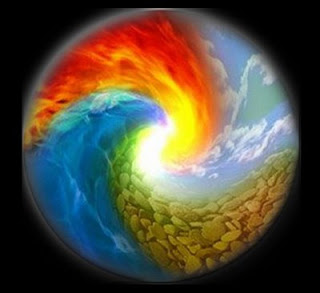
Image from http://lamagiadeloselementos.blogspot.com/
Ancient Greek philosophers thought that everything in the world was made out of four elements: earth, fire, water and air. This belief in four fundamental elements lasted throughout the Middle Ages, until the advent of the Scientific Revolution in the sixteenth and the seventeenth centuries. Exploration, inventions and scientific discoveries led to expansion of knowledge that changed people’s beliefs and widened their horizons. There were exceptions. As late as 1692, villagers in Salem, Massachusetts, did not bother to look for or care about facts. In their zealous hunt of witches, they hounded and murdered innocent women.

Dance Upon The Air, by Nora Roberts opens with a story of three sisters, known as Air, Earth and Fire. While terror reigned in Salem, these witches forged an island that would become their sanctuary:

“Away from hate let this land be torn. Lift if from fear, from death and scorn. Crave rock, crave tree, crave hill and stream. Carry us with it on midsummer moonbeam. Out past the cliff and out past the shore, to be severed from this land forever more. We take our island out to the sea. As we will, so mote it be.”

Fast forward three hundred years, and the quaint Three Sisters Island is thriving. Tourists enjoy its beaches and shops during the summer months, crime is practically non-existent, witchcraft and magic are limited to local lore and to souvenirs for the interested visitors. Or so it looks, for where would fiction be if magic perfectly solved everything and then vanished?

Nell Channing is young, pretty and talented, yet she lives in constant fear. It has not been long since she had risked her life to escape from years of soul-destroying marital abuse. She trusts no one when she comes to the Three Sisters Island, yet the beauty of the place and a mysterious sense of kinship lead her to stay on the island.

In Cafe Book, Nell finds more than a sympathetic boss and a day job. Despite the risk, she makes friends and tries to rebuild her life. Since this is a romance, a very appealing guy steps into Nell’s live. Sheriff Zack Todd is drawn to the beautiful woman, but Nell’s good looks and exceptional cooking is only part of the package. Before long, Zack will have to deal with Nell’s wariness of physical contact, with the lies she feels compelled to tell, and later on with the fact he is having sex with a woman married to someone else. Since this is Nora Roberts’ book, Nell and Zack’s love is only part of the story. Nell’s possessive-abusive husband finds out that she is alive. Nell learns about her connection to the witch Air and gets to know the descendants of Earth and Fire, who still live on the island…

I enjoyed the stories entwined in Dance Upon The Air, I and recommend the book to anyone who would like to take a vacation on a beautiful island, and doesn’t mind witches fighting ancient evil while savoring mouthwatering cream puffs.

I read other books in the trilogy straight after the first. Heaven and Earth focuses on the love between Zack’s sister and a wealthy but clumsy researcher who comes to the Three Sisters Island to investigate the rumors that there are still practicing witches on the island.

The last book is Face The Fire. Mia Devlin is amazingly beautiful, forcefully independent, rich and successful. Although she is used to do everything her own way, Mia’s life is far from being perfect. Years ago, she was ditched by the only man she had ever loved. Now, she is targeted by magical evil. Her own and lives of those she loves are at stake. Moreover, if she does not break the three hundred years old curse, the entire island is in danger of sinking into the sea like Atlantis. It takes Nora Roberts to convincingly resolve Mia’s challenges. I especially enjoyed how she wove in the legend of Selkie, and finally meeting the fourth element, the Water.

Dance Upon The AirHeaven And EarthFace The Fire
Book images from noraroberts.com. The four elements image from lamagiadeloselementos



Posted in contemporary romance, fiction, magical realism | Tagged , , , , , , , | Leave a comment

Brighter than candles

“You have the glittering beauty of gold and silver, and the still higher lustre of jewels, like the ruby and diamond; but none of these rival the brilliancy and beauty of flame. What diamond can shine like flame?”

The man who said these words during a Christmas Lecture, “delivered before a juvenile audience at the Royal Institution”, was born on 22 September 1791, in England. Here are some hints as to who he was:

  1. He founded the Royal Institution’s Friday Evening Discourses and in the same year the Christmas Lectures, both of which continue to this day. He himself gave many lectures, establishing his reputation as the outstanding scientific lecturer of his time.
  2. He was inspired by the discovery that electric current through a wire produced a magnetic field around the wire and started to investigate the relation between elecricity and magnetism. Months after he started, he was the first to produce an electric current from a magnetic field.
  3. Later, he found that when a permanent magnet is moved in and out of a coil of wire, a current is induced in the coil. He also discovered the law determining the production of electric currents by magnets.

I assume that by now it’s obvious that “he” is Michael Faraday.

“Although Faraday received little formal education, he was one of the most influential scientists in history. It was by his research on the magnetic field around a conductor carrying a direct current that Faraday established the basis for the concept of the electromagnetic field in physics. Faraday also established that magnetism could affect rays of light and that there was an underlying relationship between the two phenomena. He similarly discovered the principle of electromagnetic induction, diamagnetism, and the laws of electrolysis. His invention of electromagnetic rotary devices formed the foundation of electric motor technology, and it was largely due to his efforts that electricity became practical for use in technology.
As a chemist, Faraday discovered benzene, investigated the clathrate hydrate of chlorine, invented an early form of the Bunsen burner and the system of oxidation numbers, and popularised terminology such as anode, cathode, electrode, and ion.”
Text from Wikipedia

Faraday, however, was not only a great experimentalist.

“Since the very beginning of his scientific work, Faraday had believed in what he called the unity of the forces of nature. By this he meant that all the forces of nature were but manifestations of a single universal force and ought, therefore, to be convertible into one another. In 1846 he made public some of the speculations to which this view led him. A lecturer, scheduled to deliver one of the Friday evening discourses at the Royal Institution by which Faraday encouraged the popularization of science, panicked at the last minute and ran out, leaving Faraday with a packed lecture hall and no lecturer. On the spur of the moment, Faraday offered “Thoughts on Ray Vibrations.” Specifically referring to point atoms and their infinite fields of force, he suggested that the lines of electric and magnetic force associated with these atoms might, in fact, serve as the medium by which light waves were propagated…
By 1850 Faraday had evolved a radically new view of space and force. Space was not “nothing,” the mere location of bodies and forces, but a medium capable of supporting the strains of electric and magnetic forces. The energies of the world were not localized in the particles from which these forces arose but rather were to be found in the space surrounding them. Thus was born field theory. As Maxwell later freely admitted, the basic ideas for his mathematical theory of electrical and magnetic fields came from Faraday; his contribution was to mathematize those ideas in the form of his classical field equations.”
Text from Encyclopedia Britannica

To me, that explains why Albert Einstein kept a picture of Faraday on his study wall, alongside pictures of Isaac Newton and James Clerk Maxwell. Faraday’s quest for a unified theory still continues…

Faraday's law

Image from A Visual Tour of Classical Electromagnetism.


Posted in physics | Tagged , , , , , , , | Leave a comment

Faster than lightning

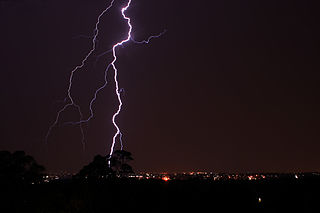
lightning

Can a charged particle moving through the atmosphere have a speed greater than the speed of light in the air?

I saw this question posted on Writers’ Cafe. After I ran a limited survey that got both “Yes” and “No” for answers, I decided to elaborate a bit on this topic.

According to the theory of relativity, the speed of light in vacuum (empty space), c, is the ultimate speed limit in the universe. Material particles can be accelerated to have mind-boggling kinetic energies, but their velocities will forever be smaller than c.
Air, however, is not empty space.
Light propagates in a transparent medium, such as water or air, with (phase) velocity c'<c. To be more precise, the light velocity in such a medium, c’, is given by c’=c/n, where n is the index of refraction in that medium.

In vacuum, c’=c and n=1. In air, n=1.0003.
The speed of light in air is c’=99.97% of c. Qualitatively, light propagates in the air almost, but not quite, as fast as in empty space. For a material particle to travel faster than light in the air, its velocity v should satisfy c'<v<c.

Every second, the Earth’s atmosphere is bombarded with Cosmic Rays. These are charged particles (mostly protons) originating from space. The speed of these particles ranges from a small fraction of the speed of light and up to about 0.999999999999c (see more at nasa.gov cosmicray)! For every particle that travels in air with velocity larger than 0.9997, the answer to the question above is definitely “Yes.”

Actually, most of the particles constituting the primary cosmic rays do not travel much in the air – they are either deflected by the Earth’s magnetic field or they interact with the air molecules in the upper atmosphere:

When cosmic rays interact with the Earth’s upper atmosphere, they produce cascades of secondary particles (these may include neutrons, kaons, pions, muons) and also emit Cherenkov radiation. Cherenkov radiation consists of photons emitted when a charged particle passes through transparent medium at a speed greater than the phase velocity of light in that medium.

Cherenkov radiation in air was first observed in September 1952. On a moonless night,

“two young researchers at the UK’s Atomic Energy Research Establishment went out into a field next to the Harwell facility equipped with little more than a standard-issue dustbin containing a Second World War parabolic signaling mirror only 25 cm in diameter, with a 5 cm diameter photomultiplier tube (PMT) at its focus, along with an amplifier and an oscilloscope. They pointed the mirror at the night sky, adjusted the thresholds on the apparatus and for the first time detected Cherenkov radiation produced in the Earth’s atmosphere by cosmic rays (Galbraith and Jelley 1953)…
… a decade after the initial pioneering steps by Galbraith and Jelley, the first operational air-Cherenkov telescope had been built, setting in motion a chain of events that would ultimately lead in 1989 to the observation of gamma rays from the Crab Nebula by Trevor Weekes and colleagues at the Whipple telescope in the US.”
From CERN Courier


Image of Cherenkov telescope from www.cta-observatory.ac.uk


Posted in cosmology, physics, science fiction | Tagged , , , , , | Leave a comment

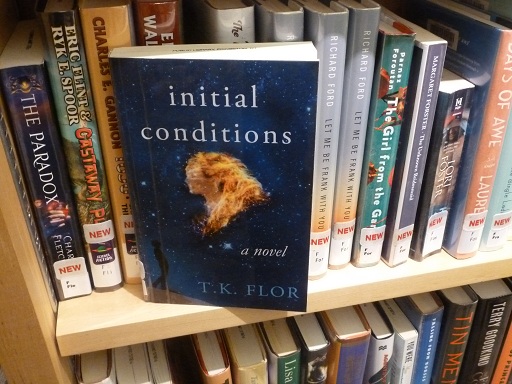
Initial Conditions in the library

Initial Conditions finds a place on the library shelf.
Thanks to Princeton Public Library!

ICPPLfront

ICPPLshelf

ICPPLback


Posted in academia, cosmology, fiction, lab lit, mainstream fiction, photos, physics, self-publishing | Tagged , , , | Leave a comment

Firebird – a thriller with high stakes and realistic physics

Firebird

One of my intents was to write a story in which the science was essential; another was for it to be entertaining.
Tony Rothman, (From the Author).

Firebird is a mythological bird from the Slavic folklore. Sometimes it is large, sometimes peacock-like; its feathers are magnificent fiery red, orange, and yellow. In folk tales heroes go on quests to capture the bird. In Tony Rothman’s novel, heroes embark on a similarly difficult and perilous task – that of supplying the mankind’s need for clean and affordable energy, by creating nuclear fusion here on Earth.

In Firebird, there are two leading fusion facilities: ITER (International Thermonuclear Experimental Reactor) in France and CFRC (Controlled Fusion Research Center) in Texas. Both are in experimental stage, probably years before they might achieve fusion. The protagonist, Dr. Nathaniel Machuzak, is a nuclear physicist in charge of one of CFRC’s units. To his surprise, the director of the Center has ordered to achieve fusion on the day of the CFRC’s dedication.

The stakes are high. The tag price for each machine is astronomical. Corporations and politicians want limitless, safe energy, but they are not ready to shell out the money when there is no guarantee that a machine can replicate the conditions that exist at the cores of stars. Rival scientists have different agendas, and no one actually knows what might work. The stress level skyrocket, then an explosion puts the entire project at risk. Accusations are rife. Scientists’ and engineers’ lives are endangered. Police investigation uncovers secrets that make one wonder who are the good guys.

For me, the most interesting part is the real physics entwined in the story. While the facility in Texas is fictional, ITER is real, and is actually being built in France (see Wikipedia and iter.org). Reading Firebird, questions kept piling in my mind. ITER is a huge endeavor in every respect. In monetary terms, investment in fusion eclipses that in LHC in CERN. However, PR for fusion, and ITER specifically, seems to be very low key. Since fusion is rarely mentioned in news about physics, here is some background (from iter.org):

Following the first fusion experiments in the 1930s, fusion physics laboratories were established in nearly every industrialized nation. By the mid-1950s “fusion machines” were operating in the Soviet Union, the United Kingdom, the United States, France, Germany and Japan. Through these, scientists’ understanding of the fusion process was gradually refined.
A major breakthrough occurred in 1968 in the Soviet Union. Researchers there were able to achieve temperature levels and plasma confinement times—two of the main criteria to achieving fusion—that had never been attained before. The Soviet machine was a doughnut-shaped magnetic confinement device called a tokamak.
From this time on, the tokamak was to become the dominant concept in fusion research, and tokamak devices multiplied across the globe.
Fusion research has increased key fusion plasma performance parameters by a factor of 10,000 over 50 years; research is now less than a factor of 10 away from producing the core of a fusion power plant.
US fusion installations have reached temperatures of several hundred million degrees Celsius.”

ITER, which means “the way” in Latin, aims to demonstrate the feasibility of fusion. The scientific goal of the project is:

“ to deliver ten times the power it consumes. From 50 MW of input power, the ITER machine is designed to produce 500 MW of fusion power—the first of all fusion experiments to produce net energy.
During its operational lifetime, ITER will test key technologies necessary for the next step: the demonstration fusion power plant that would prove that it is possible to capture fusion energy for commercial use.”
(from iter.org).

ITER tokamak

In real world, it’ll take years before ITER’s construction will be complete, and experiments will commence. In Firebird, Tony Rothman leaped over a few decades: ITER is operational and so is its American (fictional) counterpart, the CFRC. Both facilities are populated with a multinational cast of scientists. Will either of them achieve fusion? The race is on, and neither side is ready to give up. The scientists on each side are ingenious, but is it enough when their opponents restore to intimidation, sabotage and killing?

I recommend Firebird to those who like real physics in thrillers/science fiction and are not offended by pretty intense cursing. To find more about the book and the author visit www.tonyrothman.com.


Posted in fiction, lab lit, physics, science fiction | Tagged , , , | Leave a comment