Science in Fiction

“Remember that you are writing a novel, not a research paper. The story always comes first.”
On writing, by Stephen King

Okay, the story comes first, but let’s assume that adding some science to the plot can benefit the story. The question is, who is going to be interested in reading about science in a work of fiction?

When I was writing a novel with a physicist for a protagonist, I hardly thought about a target audience. I wanted my characters to spring to life as human beings, with wants, needs and emotions, and I didn’t care whether they dumped science-related information. I wrote what I wanted to read (but could not find elsewhere), without aspiring to educate anyone. Penning a novel allowed me to pick and choose, and skip the boring material necessary for a more rigorous presentation. Embracing that freedom, the story amassed, inadvertently but not surprisingly, big chunks of physics that I deemed fascinating.

For the sake of brevity, fast forward a few years and go straight ahead to a reality check I had when I asked strangers to read the manuscript. To those who asked about the genre, I said that it’s a contemporary mainstream fiction with some physics. A fiction with physics? Almost automatically it was taken for science fiction.

“Science fiction is a genre of fiction dealing with imaginative content such as futuristic settings, futuristic science and technology, space travel, time travel, faster than light travel, parallel universes and extraterrestrial life.” (Wikipedia).

I could call my novel, set in 1999, anything I wanted, but it’s definitely not science fiction. So, to what genre does it belong? And how much science can be entwined into a novel without ruining the storyline?

Books like Arthur Hailey’s “Strong Medicine” and Allegra Goodman’s “Intuition” show that fiction writers had successfully tackled realistic science in their novels. But neither of these books concerned physics. What I needed were examples of novels with physics, as well as information about relevant genres. Here is what I found so far.

If the exact nature of the science is not important, then it can be treated as a MacGuffin (a narrative device used to catch the audience’s attention and maintain suspense, but whose exact nature has fairly little influence over the storyline). Einstein’s unified field theory in Mark Alpert’sFinal Theory” is a good example of a MacGuffin. Even though Einstein never completed such a theory, it hardly mattered while reading this fast-paced thriller. The author could have substituted Einstein’s final theory with something else that would lead to a development of a weapon of mass destruction, and it wouldn’t significantly change the story.

When a novel is set in a real laboratory, and it realistically portrays science and scientists it is categorized as “Lab lit”. According to Wikipedia: “Lab-lit was relatively rare throughout most of the twentieth century, but began receiving attention in the cultural pages of science magazines during the first decade of the 21st century and has been championed by such scientist novelists such as Carl Djerassi, Ann Lingard and Jennifer Rohn.”

A New York Times article, titled In Lab Lit, Fiction Meets Science of the Real World, explains more about lab lit. In it, Katherine Bouton writes:

“Flight Behavior” fits neatly into a genre of serious fiction with a snappy new name: lab lit. I had never heard of it until I started browsing the Web for other novels about science; within minutes I came upon the webzine LabLit.com, which has “Lab Lit Lists” for dozens of novels, films, plays and TV shows.
The Web site’s editor is Jennifer L. Rohn, a cell biologist at University College London and a novelist herself. The list is a work in progress, and anyone can contribute a title. Lab lit is not science fiction, and in my opinion it’s not historical fiction about actual scientists (though some fictionalized biographies do appear on the list). Instead, in the website’s words, it “depicts realistic scientists as central characters and portrays fairly realistic scientific practice or concepts, typically taking place in a realistic — as opposed to speculative or future — world.

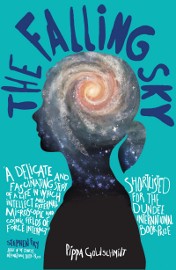
The article lists an extensive number of novels as examples of that category. The blog “Fiction about Science” adds a more recent example relevant to physics – Pippa Goldshmidt’s debut novel “The Falling Sky”.

So there is a niche for a contemporary novel with a scientist protagonist. However, I couldn’t find “lab lit” in Amazon’s categories. Among the subjects in The BISAC Subject Headings, 2014 Edition, I saw “medical” sub-subject both in “FICTION” and in “FICTION/Thrillers”, and also “Genetic Engineering” and “Hard Science Fiction” in “FICTION/Science Fiction”. Novels authored by unknown writers, set in branches of science that don’t fit into those subjects, are unlikely to pop up in front of a potential reader who is browsing the virtual shelves of “contemporary fiction”.

Indie writers are expected to use out-of-the box marketing.
Maybe I should start the story in the future, then use time-traveling as a MacGuffin, to go back to the turn of the third millennium…

Posted in fiction, lab lit, literature, mainstream fiction, physics, science fiction, self-publishing | Tagged , , , , | 4 Comments

Physics rocks

This physics-themed comic by Zech Weiner (Saturday Morning Breakfast Cereal) made me laugh.
You can see why.

Physics rocks

Posted in comics, physics | Tagged , | Leave a comment

Gargoyles in universities

“They marched in silence around a corner and she stopped before a large and extremely ugly stone gargoyle.
‘Sherbet lemon!’ she said. This was evidently a password, because the gargoyle sprang suddenly to life, and hopped aside as the wall behind him split in two.”
Harry Potter and the Chamber of Secrets, by J. K. Rowling

Gargoyles, according to Wikipedia, are grotesque figures carved with a spout designed to convey water from a roof and away from the side of a building. For some reason, they often jut out of universities’ edifices.

University of Chicago:
Gargoyle at University of Chicago

Yale University (Sterling Memorial Library):
Gargoyle at Yale University

Duke university:
Gargoyle at Duke University

Princeton University:
Gargoyle at Princeton University

Dartmouth College:
Gargoyle at Rollins Chapel

University of Pennsylvania (Penn Quad Gargoyles):
Penn Quad Gargoyles

Washington University at St.Louis (this is actually a boss):

Bradley University:
Bradley U. Gargoyles
(see more from Bradley)

Posted in photos | Tagged , | 1 Comment

Quotes from speculative science (fiction)

Without tags, would a short piece of text be enough to distinguish between an article about science and a piece of speculative fiction?
For example, here are two quotes:

(a) “… the initial leap from nothing to something may have been inevitable. Then the resulting tiny bubble of space-time could have burgeoned into a massive, busy universe…”

(b) “If the universe came to an end every time there was some uncertainty about what had happened in it, it would never have got beyond the first picosecond.”

Is it immediately clear which one is about physics and which is fiction?
As a matter of fact, one of the quotes is from a recent article in BBC, which gives a quick overview of how our universe came into being from “nothing”. Here is a longer quote from the same article:

“… a fraction of a second after the Big Bang, the quantum-sized bubble of space expanded stupendously fast. In an incredibly brief moment, it went from being smaller than the nucleus of an atom to the size of a grain of sand. When the expansion finally slowed, the force field that had powered it was transformed into the matter and energy that fill the universe today.”

If you cannot tell which quote belongs to the article, and which is to fiction, here is additional hint:
The article asks “why did it only happen once? If one space-time bubble popped into existence and inflated to form our universe, what kept other bubbles from doing the same?”

To find out how a well-known cosmologist answers the question, I suggest reading that article, titled “Why there is something rather than nothing?”.

About the quotes:
(a) is from the article.
(b) is from “Dirk Gently’s Holistic Detective Agency”, by Douglas Adams.

Posted in Big Bang, cosmology, fiction, literature, physics | Tagged , , | Leave a comment

Musing on long-term planning for success

“Think in terms of the Olympics – how much can you achieve in a four-year period?”
Joanna Penn, The Indie Author Power Pack: How To Write, Publish, & Market Your Book.

Self-publishing guides warn that success is as likely as lightning striking twice in the same place. Starry-eyed novices are thus advised to come to grips with their expectations, to work assiduously, and meticulously plan the various steps they would take in their career. While there is little to argue about the benefits of working hard while having realistic (or no) expectations, I wonder whether planning years forward is always useful.

The most planned endeavor I’m aware of is the search for Higgs Boson (the Nobel Prize in Physics 2013). This was a multinational effort that involved several upgrades in more than one accelerator. Moreover, it took almost half a century, between the publication of the work that originated the search in 1964, and until the coveted particle was “observed” in 2012.
In the case of the discovery of Higgs Boson, success depended on planning many steps ahead. But physics research from the same year, 1964, also provides counter-examples, when planning ahead did not play an important role.
That year, James W. Cronin, Val L. Fitch and collaborators conducted an experiment that studied the decay of neutral kaons. Sixteen years later, the Nobel Prize in Physics was awarded to Cronin and Fitch, for the discovery of violations of fundamental symmetry principles in the decay of neutral K-mesons. From the Nobel prize presentation speech:

Professor Fitch, Professor Cronin,
The scientific world was shocked when you first announced your discovery. Nobody, absolutely nobody, had anticipated anything like it. You had pursued your experiment with skill and determination and found the impossible to be possible.

Cronin, in his Nobel lecture, said:

The greatest pleasure a scientist can experience is to encounter an unexpected discovery. I am always astonished when a simple apparatus, designed to ask the right question of nature, receives a clear response.

In this example the outcome was surprising, but the experiment was planned. To get a better sense of whether long-term planing is always advantageous, I was looking for something that happened in 1964 in physics that practically came out “from thin air”.
Arno Penzias and Robert Wilson were experimenting with a large radio antenna, when they found a steady noise in the signal. They suspected that the source of the noise was in the instrument or in the atmosphere, but all their attempts to eliminate it failed.To make the long story short, Penzias and Wilson shared the Nobel prize in Physics for their discovery of cosmic microwave background radiation. The “noise” turned to be the oldest light in the universe, a free streaming radiation dating to a few hundred thousand years after the Big Bang. This cosmic microwave background is a cornerstone of modern cosmology.

“Well,” I hear a skeptic voice asking, “What bearing do these accidental scientific discoveries have on self-publishing?”
Personally, I find the anecdotal evidence from physics uplifting. Self publishing, like physics, has many degrees of freedom and many paths not yet explored. So, someone who isn’t good at meticulous planing can take a different route. The lack of an extensive, long-term plan is not a barrier to success.

Posted in cosmology, physics, self-publishing | Tagged | Leave a comment

A review as a “thank you”

When I read a new book, what happens to fictional people inhabiting an imaginary world might grip me for hours. Quite rarely, some of the characters linger in my mind for days, or pop in unexpectedly weeks after I reached “The End”. The author who created that world, on the other hand, remains a detached name on the cover. Regardless of whether she is a famous storyteller or he is someone I’ve never heard of before, it wouldn’t occur to me to thank the author for my reading experience. Moreover, if an idea to rave to about the book to strangers sneaks into my mind, I’ll shrug it off. No one asked for my opinion, so writing a review is at best self-indulgent. And frankly, who cares about my 2 cents?
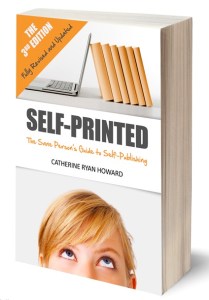
Well, one of the sections in SELF-PRINTED (3rd edition) by Catherine Ryan Howard, caused me to think again about reviewing a book that I’ve enjoyed.

“Thing is,” Catherine writes, “reviews are very important to self published books; much more so than they are to their traditionally published counterparts. With no editor or agent to vet the quality of the work, the potential customer has to look elsewhere for promises of quality.”
Since I don’t consider myself as qualified to reassure others about the quality of a literary work, I didn’t dwell on this passage, but a few pages later, I read more about reviews:

One of the nicest things about having a book out there in the world is opening your e-mail account and discovering messages from readers in far off lands, telling you how much they loved your book. Now I have no idea how many of these messages I’ve got, but I can tell you this for a fact: it’s a hell of a lot more than I’ve got Amazon reviews. Now I love those e-mails – I print them out and file them in a Break Open in Case of Loss of Confidence in Writing Emergency – but I sometimes wonder, if these people love my book so much and they took the time to e-mail me about it, why don’t they take five minutes to give it an Amazon review and tell everyone else? As I’ve already said, Amazon reviews are so important to self-published authors, I can’t stress it enough.

As a reader I understand why one prefers to contact an author directly (an email is personal – I can put there stuff that resonated with me but not intended for the public eye), rather than leave the praise on the unrelentingly cold medium of Amazon. However, after I read Catherine’s self-publishing book, and saw similar arguments about the importance of reviews in David Gaughran’s blog, I understand why an author would appreciate my “thank you” more if it’d be displayed where those considering buying the book could see it. A self-published author, who produces a book on a par with a publishing house, has to invest a lot of time and go into considerable expenses after the storytelling part is completed (there is no one else to pay for professional cover, editing, proofreading, etc.). Then, after the ebook/paperback goes into the world, there is no professional marketing department to promote the self-published book, and no brick-and-mortar stores where a customer can discover it. So if the book really stood out, a nice way to thank the author is to praise the book where it can be seen by potential buyers (on whom the author’s career depends).

Posted in fiction, self-publishing | Tagged , , | 1 Comment

Self-publishing a mainstream novel – Q&A with Catherine Ryan Howard

Catherine, in her own words, is “a writer, self-publisher and caffeine enthusiast from Cork, Ireland.” THE SANE PERSON'S GUIDE TO SELF-PUBLISHING
I first saw Catherine’s blog, ‘Catherine, Caffeinated‘,
in the summer, when I was starting to explore the option of self publishing. To promote her new book,
SELF-PRINTED: THE SANE PERSON’S GUIDE TO SELF-PUBLISHING (3rd edition),
Catherine invited bloggers, twitters, and Facebook page-owners to present her with a question about self-publishing, that she’d answer (along with an offer to receive a digital copy of Self-Printed 3.0). The following is my question, and Catherine’s answer.


Q: I intend to self-publish a mainstream contemporary novel. On the Internet, most of the information about discoverability of self-published books and e-books pertains to genre fiction (e.g. romance/thrillers/science-fiction/fantasy/YA). The rest falls under the large umbrella of ‘literary & fiction’, with subdivisions for historical/literary/women’s fiction. ‘Mainstream fiction’, however, falls between the cracks of this genre-oriented system.
What is your advice for making a self-published mainstream novel visible?

A: I have to be blunt and say I just don’t believe there’s any book that can’t be shoehorned into a category or genre for promotional sake, but that’s an argument for another day…

Your point is that most of the advice you find online is orientated towards genres of fiction that are not yours (and we’ll agree to disagree on why they’re not yours). But here’s all your have to do to start to promote your book online: find readers who are predisposed to liking it because they like something else that was similar. This “something else” doesn’t have to be a genre – it can be a single book. So let’s say you’ve written the next To Rise Again at a Decent Hour. That’s a book that’s difficult to categorize into a specific genre, and book bloggers who love crime and Goodreads groups dedicated to steampunk are going to be of no use to you. So I would think of another book that is (a) similar to yours, (b) was published recently and (c) sold well, ideally hit the bestseller lists. Let’s say sake of argument that we came up with The Bone Clocks by David Mitchell.

Now I would:

1. Look up The Bone Clocks on Amazon and make a list of the titles that appear in “Customers Also Bought”. Going forward we’re going to rely on as many of those titles as we think are relevant, plus The Bone Clocks

2. Find the book’s Goodreads page and contact the users who gave it 5* and are accepting messages. (You can send private messages to non-friends but they are limited to I think around 12 a day). Offer them a complimentary copy of your book to review. Set up a Goodreads giveaway while you’re at it.

3. Google the titles along with the word “review”. The first couple of pages of results will be newspapers and magazines, but keep going and you’ll get to the book bloggers who reviewed them. Contact them re: reviewing your book.

4. A KDP Select free promotion is a great way to get people to take a chance on your book AND to entice readers directly. Genre/category won’t matter here – the zero price will attract all.

5. Genre/category won’t matter on Twitter either. Use PicMonkey.com or Canva.com to make up some attractive Twitter graphics (look in publishing houses’ Twitter feeds for great examples) and run a giveaway for a day where entry is by retweeting and following. Hopefully by now you have a nice quote from a blogger about your book to add to the graphic, and when people look up the book on Amazon they’ll see a great sales rank and reviews, or lots of 5* ratings on Goodreads. What little genre cubbyhole your book does or doesn’t fit into has ceased to matter.


Posted in fiction, mainstream fiction, self-publishing | Tagged , , , , , , | 3 Comments

The Falling Sky – contemporary fiction with realistic physics

Falling_Sky_170x176.2701

‘Do you believe it?’
Ah, that word again. It sounds odd in this space. They are all used to statistical odds, experiment, proof, even uncertainty, but they rarely talk about belief. It sounds too human. And they like to pretend that what they do is beyond human.
She looks at this man, whom she doesn’t know, and wonders what he thinks. She pauses before she speaks, because she knows this is important. It’s one thing to present an odd result, a peculiar image. It’s another thing entirely to have to explain your worldview. And she wants to get this right.

 The Falling Sky, Pippa Goldshmidt

This snippet in a part of a scene at a conference on cosmology, where Jeanette (the protagonist of The Falling Sky) presents a sensational astronomical observation. Like many other scenes in the novel, it brings to life physicists, their agendas, convictions and prejudices.

Since physics and physicists rarely have a pivotal role in fiction (other than in science-fiction), I expect that one would want to know whether the novel illuminates the importance of physics. Considering the emphasis given in the last decade to promoting women scientists, one might also be curious whether the novel emphasizes the role of women in physics’ advancement?

Pippa Goldschmidt addresses the relevance of astronomy and cosmology. She gives an honest answer of someone who knows thoroughly the field, yet does not depend on grants and her peers’ affirmation (any details would be spoilers, but the author’s wry outlook shines through the twists and turns of the story).

As to the second question, well, Jeanette Smith is definitely not a poster girl who would draw young women into science. She reminds me more of Stephen King’s Carrie, rather than Isaac Asimov’s legendary Susan Kelvin. Jeanette is troubled, she is self-doubting, and she is the most REAL lead female physicist I’ve met in fiction.

Do I recommend this book?
In short, yes.
The physics is sparse – explanations are short and appear when they are needed. Some familiarity with the basics of the Big Bang theory will add to the understanding of what the characters are discussing, and what are their dilemmas. The academic life is portrayed vividly, and with a healthy dose of humor. You won’t meet Nobel laureates or scientific celebrities (aside from Hawking, who makes a cameo appearance in his wheelchair). Jeanette and her colleagues are mostly young scientists, who struggle to promote their careers. Competition is tough, and arms and poison are out-of-question, so these bright and ambitious researchers have to find other means to get ahead.

Posted in Big Bang, cosmology, fiction, literature, physics | Tagged , , , , , | 2 Comments

How many Higgs fields might be on a head of a pin?

If you have a moment to spare, try a word association game with the word “field”. You might think of words as different as battle, baseball, oil, and strawberries. Now, if a physicist played the game, he (and occasionally she) might come with electrical, gravitational, quantum theory, or some other unusual word.

I was asked whether ‘Higgs field’ is countable (i.e. when a word’s plural and singular forms make sense, and that it is not a mass noun). That question made me realize that it is not always clear what physicists mean when they use the word “field”. Looking for a precise yet non-mathematical explanation, I found in the famous Feynman Lectures on Physics, that a “field” is a “condition” in space. Specifically, Feynman used the concept of a field to explain how positively and negatively charged particles interact:

…the existence of the positive charge, in some sense, distorts, or creates a “condition” in space, so that when we put the negative charge in, it feels a force. This potentiality for producing a force is called an electric field. When we put an electron in an electric field, we say it is “pulled.”

If the explanation seems straightforward, be assured that the notion of field muddles when one approaches the realm of quantum field theories. The electromagnetic field, for example, becomes in some instances a photon. But particles and fields are NOT interchangeable. It required the LHC (the largest particle accelerator in the world) to very briefly generate the Higgs Boson, even though the Higgs field permeates the space. To see a nice illustration of what a field is, and how it is represented, click on a short video published by Scientific American on YouTube.

Back to the question. The particle physics Standard Model has one Higgs field, but there are extensions of the model with more than one Higgs field, so the answer to the question whether ‘Higgs field’ is countable is… inconclusive.

Posted in physics | Tagged , , , , | Leave a comment

New York, New York

Manhattan, on a sunny August day.

Music, please…

P21

P27

P29

P79

Posted in photos | Tagged , , , | Leave a comment