Old science-fiction and new research agree – paper is mightier than computer

“A paper computer?” said the general. He looked pained.
“No, sir,” said Shuman patiently. “Not a paper computer. Simply a sheet of paper. General, would you be so kind to suggest a number?”
“Seventeen,” said the general.
“And you, Congressman?”
“Twenty-three.”
“Good! Aub, multiply those numbers and please show the gentlemen your manner of doing it.”
“Yes, Programmer,” said Aub, ducking his head. He fished a small pad out of one shirt pocket and an artist’s hairline stylus out of the other. His forehead corrugated as he made painstaking marks on the paper.
General Weider interrupted him sharply. “Let’s see that.”
Aub passed his paper, and Weider said, “Well, it looks like the figure seventeen.”
Congressman Brant nodded and said, “So it does, but I suppose anyone can copy figures off a computer. I think I could make a passable seventeen myself, even without practice.”
“If you will let Aub continue, gentlemen,” said Shuman without heat.
Aub continued, his hand trembling a little. Finally he said in a low voice, “The answer is three hundred and ninety-one.”
Congressman Brant took out his computer a second time and flicked it, “By Godfrey, so it is. How did he guess?”
“No guess, Congressman,” said Shuman. “He did it on this sheet of paper.”
“Humbug,” said the general impatiently. “A computer is one thing and marks on paper are another.”
From The Feeling of Power, by Isaac Asimov

Asimov’s story, dated from 1957, takes place in a far-future, when a long-embattled Earth is engaged in a computer-directed war with Deneb. By then, writing numbers, let alone performing calculations on a paper, is a lost art. Continue reading →

Posted in science fiction, writing | Tagged , , , , , | Leave a comment

Fictional choices

“It is our choices, Harry, that show what we truly are, far more than our abilities.”
From conversation between Dumbledore and Harry, at the last chapter of Harry Potter and the Chamber of Secrets, by J. K. Rowling

I recalled this statement a few days ago, while I was reading Hugh Howey’s Wool. In that novel, the protagonist, Juliette, is an extremely talented, strong-willed yet likable mechanic. Half a way through the story she makes an unprecedented choice, which results in an uprising, bloodshed, and more. As the story unfolds, Juliette’s responses and choices become almost super-human. I expected her to crumble under the pressure, but Juliette prevailed and even triumphed. Purged by water and fire, she morphs from an alpha-woman into someone unstoppable and indestructible. Then, at the very end of the book, one glimpses the “old” Juliette.

“Me? Mayor?” Juliette crossed her arms and sat back, painfully, against the chair. She laughed. “You’ve gotta be kidding. I wouldn’t know the first thing about –”

Continue reading →

Posted in fiction, literature, mainstream fiction, science fiction, writing | Tagged , , | Leave a comment

CP Violation: what is it and when does it matter?

“Suppose the TV-news suddenly reported one evening that visitors from outer space were planning to land on Earth; that the space travellers have radioed a demand for immediate information about the composition of the Earth. Does it consist of Matter or Antimatter? The answer to this question is one of life and death. The two kinds of matter are known to annihilate each other atom by atom. The space travelers claim, furthermore, that the nature of their own kind of matter was determined before leaving. What they now want to know is, whether the same tests have been made on Earth. ”
from The Nobel Prize in Physics 1980 Award Ceremony Speech

In a nutshell, the answer is “Yes”. A difference in behavior between matter and antimatter has been observed in various experiments. However, it’s rare and very subtle. It cannot be observed in everyday life, and not even in physics labs.

Continue reading →

Posted in cosmology, physics, science fiction | Tagged , , , | 2 Comments

Inge Lehmann: Discoverer of the Earth’s Inner Core

“You should know how many incompetent men I had to compete with —
in vain”
Inge Lehmann.

Quips aside, Inge Lehmann was a pioneering seismologist who discovered that the Earth has both an inner and an outer core. Continue reading →

Posted in physics | Tagged , , , | 2 Comments

Photos from Charleston, SC

A1b Continue reading →

Posted in photos | Tagged , , | 1 Comment

When does a hobbyist become a professional writer?

“You seem to want to write, so write…
Even if only the people in your writing group read your memoirs or stories or novel, even if you only wrote your story so that one day your children would know what life was like when you were a child and knew the name of every dog in town – still, to have written your version is an honorable thing to have done. Against all odds, you have put it down on paper, so that it won’t be lost. And who knows? Maybe what you’ve written will help others, will be a small part of the solution.”
Bird by Bird, Some Instructions on Writing and Life, Anne Lamott

“One of the hardest things I’ve had to learn as a writer is that while virtually any story can be a good book if done correctly, not every story should. It’s possible to have an amazing idea and still lack the interest necessary to polish it to publication level shine. I can not tell you the number of books I’ve plotted, written 30k words in, and then abandoned because I simply could not stand to look at them another second. Every single one of these ideas looked great on paper, and maybe in another author’s hands they could have been golden, but in the end I just didn’t care enough to push through. As someone who makes her living through writing, these stalled books are doubly disappointing. I’m pretty fast now at plotting and writing, but each of those stories still took time and work that I will never be paid for. It’s like working a job for a month only to find out at the end that you’re not getting a check. Even if you enjoyed yourself and everyone had the best intentions, you can’t afford to work for free.”
2k to 10k: Writing Faster, Writing Better, and Writing More of What You Love, Rachel Aaron.

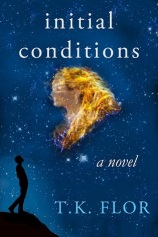
Once upon a time (about half a year ago), I thought that there were two types of writers: aspiring writers and published (by which I also include self-published) writers. For years, I worked on one story I was passionate about. By mid-January, I held a physical copy of Initial Conditions. Yes, it was exhilarating. After a decade of writing and rewriting, it was no longer a story I wrote “so that it won’t be lost”. It became a real book, available to be read far beyond my writing group and family circle. For the first time I felt like an author.

After a couple of weeks, the dazzled expression of a freshly minted “author” started to wear off my face. I began wondering, “What’s next?” I had more to tell about Danielle, Jonathan and certain professors from King Solomon University. I wanted to continue writing, but I lost that starry-eyed outlook that drove me to complete and then publish a novel.

I was on vacation during the spring break. When I came back, I tried to resume writing. To say it gently, the meager word count was the least of my problems. What I wrote was boring and made little sense. Even worse, when writing, I felt that I’ve already told the story I was meant to tell, that anything I’d write will be like reheating leftovers. I shifted my focus to “research”, which is a convenient term for procrastination.

Nothing worth telling happened until a very wise guy sagely suggested that I’d try to write something completely different. Something that wouldn’t take very long, and have a wider appeal. This idea seemed so ingenious I asked him if he borrowed it from The Cinema of George Lucas (“During the production of THX Coppola challenged Lucas to try to write something ‘warm and fussy’ for his next project, and Lucas embraced the idea.” The outcome was American Graffiti.) The very wise guy said that it’s just common sense.

While I was looking for an exiting subject to write about, David Gaughran blogged about what it takes to move on to the next level of writing fiction. Following his recommendation, I bought Rachel Aarons’s 2k to 10k. This short book (which I also recommend) explained to me why Initial Conditions took so long, and offered some remedies. (In a nutshell, it showed that one can write much faster by knowing what to write before writing it. Another way to boost writing is to do it daily, during one’s prime writing time.) David Gaughran’s post and Rachel Aaron’s book also made me realize that a hobbyist and a professional writer differ not only in the amount of books they write and sell. The entire premise seems to be different. A hobbyist writes what s/he wants to read, when s/he feels inspired. A professional writes constantly and fast, with a target audience in mind (that also explains the prevalence of series in popular genres).

It gave me some food for thought, but did not guide me as to how I to combine what I’m enthusiastic about with writing in a popular genre. What may be more relevant is Aaron’s advice on increasing productivity:

“There are many fine, successful writers out there who equate writing quickly with being a hack. I firmly disagree. My methods remove the dross, the time spent tooling around lost in your daily writing, not the time spent making plot decisions or word choices. This is not a choice between ruminating on art or churning out novels for gross commercialism (though I happen to like commercial novels). It’s about not wasting your time for whatever sort of novels you want to write.”

I don’t know whether the prospect of becoming a hack deters anyone, but it certainly wouldn’t bother me. Asimov was a very prolific writer. Like hoards of his other fans, I read and reread his stories, without caring whether it took him hours or years to write. Those who worry about “literary” whatsoever, here is what Stephen King wrote on “How much writing constitutes a lot?” (from On Writing):

“That varies, of course, from writer to writer. One of my favorite stories on the subject – probably more myth than truth – concerns James Joyce. According to the story, a friend came to visit him one day and found the great man sprawled across his writing desk in a posture of utter despair.
“James, what’s wrong” the friend asked. “Is it the work?”
Joyce indicated assent without even raising his head to look at the friend. Of course it was the work; isn’t it always?
“How many words did you get today?” the friend pursued.
Joyce (still in despair, still sprawled facedown on his desk): “Seven.”
“Seven? But James… that’s good, at least for you.”
“Yes,” Joyce said, finally looking up. “I suppose it is… but I don’t know what order they do in!”

Issac Asimov
Issac Asimov
James Joyce
James Joyce

According to King, a reasonable goal is writing at least a thousand words per day, at least six times a week. What about not having inspiration? “Don’t wait for a muse.” King advises. Writing should be treated just as “another job like laying pipe or driving long-haul trucks. Your job is to make sure the muse knows where you’re going to be every day from nine ’til noon or seven ’til three. If he does know, I assure you that sooner or later he’ll start showing up, chomping his cigar and making his magic.”
Even though King doesn’t say so, his advice seems what distinguishes a pro from a hobbyist. If one can sustain this kind of writing for years, s/he becomes professional.


Posted in fiction, literature, mainstream fiction, self-publishing, writing | Tagged , , | 4 Comments

Accomplished toddlers primed for success

“No one can be really esteemed accomplished who does not greatly surpass what is usually met with.”
Jane Austen, Pride and Prejudice.

It has been over two hundreds years since Miss Bingley made this snooty assertion, and yet her sentiments seem today just as relevant as the latest iPhone. To be “esteemed” (or even to have job-security in a society buffeted by the advent of disruptive technologies and the swings of financial markets), one is expected to “surpass what is usually met”. As the title of this post suggests, this trend begins at a very young age.

Continue reading →

Posted in fiction | Tagged , , , , , , , | Leave a comment

Famous physicists – A to Z

I was catching up with blog-posts accumulated on my reader during a vacation, when it occurred to me that there aren’t as many posts as one might expect during the A–to–Z challenge (it requires one to blog about a theme every day, except Sundays, throughout April). As Tara Sparling predicted, I appreciate that there weren’t hundreds of posts in my reader. Being still in a “vacation mood”, this post is a twist on the A–to–Z challenge – it presents one eminent physicist for every letter of the alphabet (for letters like “c” and “w” I chose from several names, while letters “q” and “x” were challenging). Continue reading →

Posted in physics | Tagged , , , , | 1 Comment

Shadow World – an unusual hero’s journey

“If this is about anything, it’s the boundary between creation and madness, art and science, the natural and the artifactual. Characters are fictional although some are inhabited by amalgamated aspects of real people. The science is factual but I insert plausible speculation in places.”
Chris Impey, from preface to Shadow World.

Real science in a contemporary novel written by an astronomer whose research focuses on observational cosmology – such a book should have popped in searches I did for novels with realistic physics and in the automated book recommendations I routinely get. Nevertheless, I did not hear about professor Impey’s books until I visited his website. There I learned that along with his research, Impley pioneered curriculum development in astrobiology, published astronomy textbooks, explored issues at the crossroads of science and religion, and also published six popular science books and one novel, the Shadow World. As a reader, I was intrigued by the vast expanse Shadow World seemed to offer. As a writer, I was curious to find out how Impey incorporated science in a novel.

Shadow World has an unusual structure for a novel. It is written in seven episodes, all narrated by the main character: a Scot named McEvoy. (“Just that. McEvoy. Nobody calls me Ian but my sis; even my mum calls me McEvoy.”)

The first episode takes place in Arizona desert. McEvoy is nineteen years old, a curious young man with somewhat faulty memory. McEvoy’s unquenchable thirst for knowledge singles him out. He is an adventurer, a seeker who ventured the into the majestic Grand Canyon in a search for hidden meaning. In his quest, McEvoy follows a mentor-trickster, a Navajo guide with a checkered past and questionable trustworthiness.

The second episode takes place in New York City. McEvoy is twenty-five, but he’s still brimming with promise. Even though he clearly has some mental problems, he is bright and gushing. He finds a new mentor. He also finds a partner for both sex and intellectual adventures – a beautiful woman with a French accent, who happens to be doing a PhD in astrophysics at Columbia University.

The third and forth episodes take McEvoy to China and to Patagonia, respectively. Both times he ends up in archeological excavations, but with very different outcomes.
McEvoy is about thirty when he finds himself in the Emerald Island (fifth episode). In Belfast, he reads about a “lecture series at the Armagh Observatory on astrobiology, the study of life in the universe.” Since he has a soft spot for astronomy, he hops on a bus to Armagh and attends the lecture. Intrigued, he joins an invitation-only research symposium. How? “… nobody’s manning the registration desk so I pick up a packet and a blank name badge and invent an academic affiliation for myself.”
I did not expect what followed next.

At coffee, a man wearing a blazer and clubby tie approaches. “I don’t recognize you. Were you at the banquet last night?”
“No, sorry old chap.” I affect my poshest Edinburgh accent. “The beastly flight was late, and I had a splitting headache, so I stayed in and worked on my monograph.”
“I see,” he eyes me carefully. “I’m Liam Kennedy, Director of the Observatory here.”
“Professor Ian McEvoy, very pleased to meet you.” Careful McEvoy, not too plummy.
“And you’re from…” he peers at my badge. “… the University of the Outer Hebrides.”
“Not to be confused with our sister institution, the University of the Inner Hebrides.” I say confidently.
“Mmm. I can’t say I’m familiar with it. Do they have an astronomy department?”
“Absolutely. Brilliant skies.” I lean in conspiratorially. “Of course it’s not much good in the summer.”
He faces me squarely. “You’re not a professor or an astronomer, are you?”
My best hangdog face. “No, but it was fun while it lasted.”
“Look, Mr. McEvoy, if that is your name.” I nod. “There’s nothing secret or private about our meeting. We charge registration to cover the cost of the lunches, the banquet, and the conference bag. But I’m happy to waive registration for a member of the public who’s so keen he’s already sat through one of our technical sessions.”
“Why that’s awfully decent of you.” I’m stuck in my upper crust accent and worry that the wind might change.
“Enjoy the meeting, Mr. McEvoy, and if I can help in any way don’t hesitate to ask.”

Typically, McEvoy makes the most of the invitation…

In the sixth episode, an older McEvoy finds himself in California. He gets to visit the telescope that was used by Edwin Hubble and learns more about physics and about himself. I won’t spill what happens, because the last two episodes are respectively the Ordeal and the Denouement of McEvoy’s extraordinary journey. If you are interested in my impressions from the book, you can read on – there are no spoilers.

I was surprised by the unusual combination of topics the novel covers. Through McEvoy’s eyes, one encounters Hopi, Celtic and Norse myths, Stalin’s gulags, ethnic tensions in China, and the conflict in Northern Ireland. Among the recurring themes are science versus religion, and the subjects of abuse and alcoholism. Literature, visual arts and music are parts of the story, and even more so are the sciences. Here the canvas is diverse and includes among other disciplines archeology, biology and physics. Yes, all of them in a book of about 330 pages.

While reading, I sometimes felt that there was too much good stuff to digest, but the narration is interesting, and the protagonist keeps moving, so I tagged along. A passage when a scientist tells McEvoy that:

“Genetics has entered the industrial age. We’ve found genes that regulate and control Alzheimers and autism and Graves disease and a host of other ailments. If the 20th century was the age of physics, the 21st century will be the age of biology.”

made me wonder whether the author used fictional characters to voice his views. A related question is whether the researchers professor Impey portrays in the novel reflect real academics and their hierarchy? Most of the researchers in Shadow World are described as dedicated to their work, encouraging to their students, and generous to McEvoy. The only exception are the women. Here is how Helen Matson, a PI (Principal Investigator) of a multinational archeological dig, is described:

“Over the next few days I get to know the other scientists better. It’s a very interdisciplinary team. In addition to anthropologists and archaeologists, there are geologists, climatologists, archeologists, and even an epidemiologist. These smart researchers know their stuff and some have healthy egos, but they all accept Matson as their leader and also defer to her in more subtle ways. In this crew, there’s only one alpha dog.”

The other female researcher in the team is

“a woman who I’ve not heard a peep from all week. She’s so quiet she’s invisible. As she is now. She slowly chews her vegetables. All I know is the name: Sonja Escobar.”

Chris Impey ends the novel telling the reader who McEvoy really is. I hope that he will write more works of fiction. And maybe, someday, he’ll address the question whether the “alpha dog” and the “invisible” woman represent female researchers in academia.



Posted in cosmology, fiction, literature, physics, science fiction | Tagged , | 3 Comments

Maps of Physics and Fiction

My two favorite subjects presented through maps:

Bernard H. Porter’s 1939 map depicting Physics as a continent, with rivers corresponding to its principal branches. From dabacon.org.


Fiction Island and a rough layout of the genres, from Jasper Fforde, 2011:


Posted in fiction, literature, physics | Tagged , , , , | 1 Comment