
“There’s always something redeeming in trash. I’ve done plenty of trash and made it shine. This” – she kicked the script again with relish – “is shit.”
“She” is Eve Benedict, an aging movie star who still has a lot of clout in Hollywood. Bossy and manipulative, she lives “alone” in a walled estate in Beverly Hills, drinks champagne like a marathon runner guzzles water, and smokes as if she could not subsist on mere air. Four failed marriages and obsession with her looks add to the impression of a self-absorbed, shallow woman, so one isn’t surprised to read that Eve is poised to tell her story to a celebrity biographer. It’s harder to see why her decision is met with such a wide, almost unanimous disapproval, even from people who have a vested interest in its financial success. When threatening notes start to pop up, both in the manor house and in the guest house where Eve’s biographer and her ten-years-old son stay, it becomes evident that someone is determined that Eve’s tell-all memoir would not materialize.
Eve’s Hollywood career is the backbone of Nora Roberts’ Genuine Lies, a genre-straddling novel, with events unfolding both in the present and in Eve’s recollections of her life and career. Published in 1991, my guess is that the “present” is late 1980s. The “past” starts when “Betty Berenski from Omaha” leaves “Betty and the cornfields behind” and Eve Benedict arrives to Hollywood. Shrewd and ambitious, she volunteers at the Hollywood Canteen, where “Bette Davis pours coffee and Rita Hayworth serves sandwiches.” An actor she meets there becomes her lover. He also helps launch Eve’s acting career, and, since it’s Hollywood, he gifts her a necklace of diamonds with a huge, hot ruby in the center.
“The diamonds were shaped like stars, the ruby like a tear… He took the necklace out, let it run through his hand. ‘When you reach for stars, Eve, you loose blood and tears. That’s is something you should remember.’”
And she remembers this. Eve’s story mixes glamour with criticism of both the Golden Age and the practicality of times “when movies were made by accountants”. There is romance, sex, gambling, and excesses that range from merely annoying to criminal. The cast includes actors (ranging from Hollywood to English theater), servants and assistants, mobsters and cops, and many others. Some of the story seems outdated in 2020s. Dealing with Hollywood, cliches are unavoidable. But in all, most of the story – the hypocrisy of “old fashioned values,” child neglect, and the ambivalence about abortions – seem even more relevant today than when it was published. I expected the romance between Eve’s stepson and her biographer to be a major part of the book, but it was not, for the sixty-seven years old movie star easily eclipsed the much younger, and considerably less flawed couple. It took more than striking looks, dogged determination, and lack of scruples to propel Betty Berenski to stardom and keep her at the top for nearly fifty years.
Reading the novel, I noted similarities between the fictional Eve and legendary Bette Davis, that went beyond their heavy drinking and smoking. Eve Benedict shared her given name with Bette Davis. She had the same number of marriages, an adopted son, and a biological daughter. I could easily see her play the role of the cunning Eve Harrington in All About Eve, where the younger actress Eve manipulates the character of Bette Davis until she threatens the aging actress’s career and personal relationships. Nora Roberts’ Eve is neither particularly good nor evil, which makes her story unusual and way more intriguing. This was a gripping and fun read.


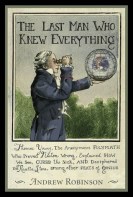 Thomas Young (1773 – 1829) sought these clues throughout his life. A child prodigy with interest in classics and mathematics, he was, according to

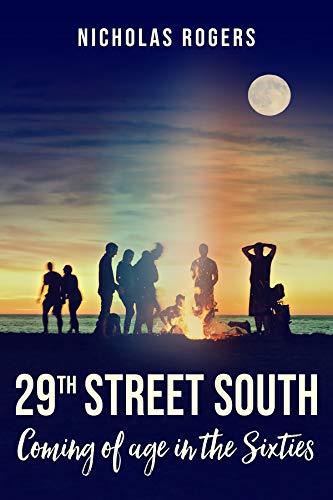 It seems that an entire generation can recall what they were doing when they heard about Kennedy’s assassination, but Robbie’s response drew me to read on. The sheer absurdity of being sent to the principal by the teacher, the conversations and the people Robbie met that day, created an illusion that I was there, watching and listening to real people. This uncanny immersion continued as the story progressed, and news headlines entwined with Robbie’s private life. I cannot say that I liked everything I read – the hatred during the civil rights demonstrations, Robbie’s friend almost raped – but the bad things did not spoil the story. It has dark moments in a rich canvas with many bright episodes.
 The Changelings – a clan of educated rats – know a lot about people. People know little about rats except that they steal food and cause plagues. When the Changelings arrive to a town that suffers from a shortage of food, they find, as expected, townspeople who hate rats and want to see them gone, by whatever means that takes. But no one is prepared for what else they’ll find in the town.